
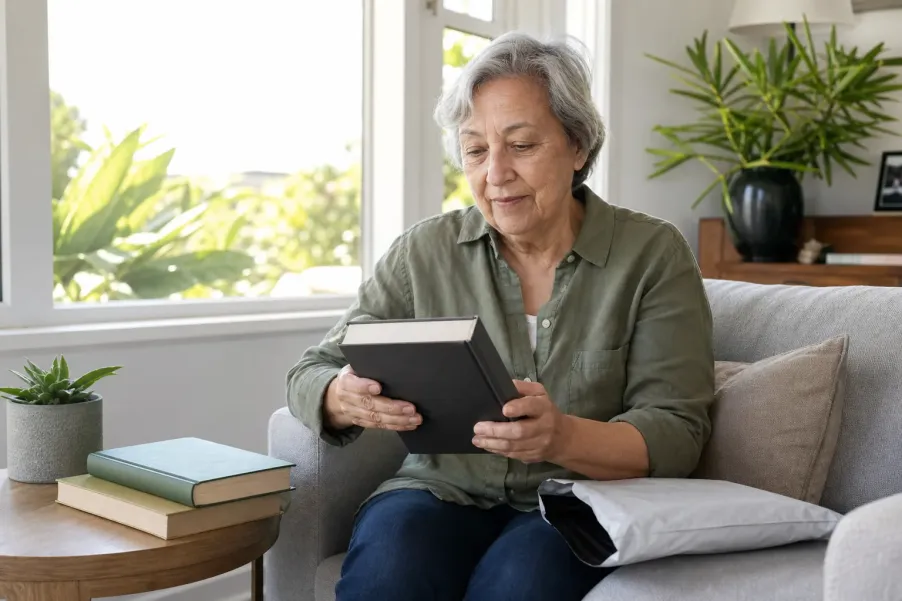
LA County Library Books By Mail lets qualifying residents receive library books through the mail without shipping charges. Start by confirming that the service covers your address and situation, make sure your library-card details are ready, choose who will select books, and learn the reusable-package return steps before placing a request.
Confirm the service first
Books By Mail is not a general delivery promise for every Los Angeles County address. Library staff confirm whether the current program fits your situation and service area.
Prepare your card details
A library card is required. If you need a card, ask staff how to provide valid identification through the current secure process.
Choose how books are selected
You may select titles yourself or ask about a designated borrower or shopper. Decide how much help you want while keeping your reading preferences central.
Save the return materials
Keep the reusable shipping bag and mailing label together. A simple arrival routine makes the one-month return step easier to remember.
What is LA County Library Books By Mail?
LA County Library Books By Mail is a free library service for residents described by the Library as homebound, living in convalescent homes, or living in rural parts of the LA County Library service area. The official page currently says eligible users may request up to four books at a time, shipping is free, and a library card is required.
The word eligible matters. A public webpage can describe the program, but it cannot decide whether a particular person, address, temporary limitation, residence, or card status qualifies. Call the program or use its official inquiry route before planning around the service. LA County Library currently lists 661-948-2410 for questions, but verify the number on the official page when you contact staff because routing can change.
Books By Mail is also narrower than a complete remote-library service. The current program page says only books are sent. It does not promise magazines, movies, devices, technology kits, museum passes, or every item in the catalog. If digital reading is easier, LA County Library also offers eBooks and audiobooks through separate services. The goal is to choose the route that matches the reader, not to force every need into one program.
This guide focuses on the practical handoff: preparing for the first contact, deciding who selects books, receiving the package, protecting the return materials, and asking for help when standard print is difficult. It does not enroll anyone, verify an address, issue a card, reserve a title, or guarantee delivery.
What should you prepare before contacting Books By Mail?
Prepare a short set of facts, not a folder full of private records. The official Books By Mail form asks for contact and address information, a library-card number if available, the estimated distance to a library, device access, and reading preferences. If you need a library card, the page says a valid ID is required and staff will follow up. Ask exactly how to provide it. Do not email or text sensitive documents to an address or number you have not verified.
Four-part preparation list
- Identity and card: Have your name, current address, library-card number if you have one, and a simple statement about whether you can visit a library. Do not send an ID until staff provides the official method.
- Best contact: Choose a phone number, email address, or trusted helper route you actually check. Say when and how staff can reach you.
- Reading preferences: Note two or three favorite authors, subjects, genres, and print-size preferences. Include topics or content you do not want.
- Helper choice: Decide whether you will place holds yourself, authorize someone to pick up and return books, or ask a helper or library staff member to select mailed books.
If you do not have a card, ask Books By Mail staff about the current card process rather than assuming you must travel to a branch. LA County Library’s general library FAQ says a standard card application normally involves valid identification and also describes a digital-card route, but a digital card is not automatically the same as the card status needed for this mailed-book program. Let staff explain the correct next step.
A trusted helper can take notes during the call with the older adult’s permission. Repeat the answer back: “I understand that my next step is ___, and I should expect ___.” Record the staff contact route and date, but avoid copying unnecessary private information into shared family messages.
A simple first-contact script
“Hello. I live in [city or community] and would like to ask whether LA County Library Books By Mail may fit my situation. I have [a library card / no current card]. Could you explain the next step, how I should provide any required identification, how book selections work, and how returns are mailed?”
How can you choose books without making the process complicated?
The official page says users can select titles from the Library catalog and place holds through the Books By Mail route. It also says a family member, friend, or library staff member may help select books. Start with the least demanding method. A specific title is useful when you know exactly what you want; a short preference profile is often better when you want pleasant surprises.
Try a spoken profile such as: “I enjoy recent biographies and gentle mysteries. I prefer large print, avoid graphic violence, and would like books under about 400 pages.” Add favorite authors or subjects. This is more helpful than saying only “send anything good,” and it does not require filling out a pretend checklist at home. If your interests change, update the profile rather than continuing to receive books that no longer fit.
Availability can change. A title shown in the catalog may be checked out, excluded from the program, or delayed. Ask whether you should name alternatives or broad subjects. Do not purchase a book or pay a third party who claims that payment is required to move ahead; the Library describes shipping as free.
If you are unsure whether regular print, large print, an eBook, or an audiobook works best, use All Seniors Foundation’s senior-friendly reading format trial. That guide helps compare comfort and effort before you request several items. It is not a substitute for the Library’s current format inventory.
What is the difference between a designated borrower and a designated shopper?
Designated borrower
LA County Library describes this as authorizing a trusted person to select, pick up, and return books on the user’s behalf. This route may fit someone who wants a helper to visit a branch rather than receive mailed selections.
Designated shopper
The Library describes this as having books selected by library staff or by a family member or friend and sent to the homebound user through the mail. This route keeps delivery central while allowing help with choices.
Selecting titles yourself
If using the catalog and holds is comfortable, ask staff for the exact Books By Mail hold route. Do not assume that a normal catalog hold will automatically be mailed.
Choosing the safest fit
Use a trusted person, set a clear end date if authorization is time-limited, and keep the older adult involved. Never share a card number or PIN more broadly than the official process requires.
Authorization should reflect the older adult’s choice. A helper can narrow options, read catalog descriptions aloud, or place a hold, but should not replace the reader’s preferences with their own. If decision-making authority is unclear, pause and ask the Library what documentation it requires; this Article cannot interpret legal authority.
For someone who wants to learn the catalog with support, a public library computer session plan can help organize a future visit. If leaving home is not workable, ask whether staff can guide the catalog process by phone or another accessible route.
What is a simple request-to-return routine?
Get the exact next step
Confirm service fit, card status, selection method, item limit, and contact route. Ask what will happen after your inquiry and when it is reasonable to follow up.
Choose titles or preferences
Use the official hold path staff provides, or give a concise reading profile to the authorized selector. Ask for alternatives if a specific title is unavailable.
Keep the package together
When books arrive, place the reusable shipping bag and mailing label in one visible, dry location. Check the contents and contact staff if an item appears damaged or incorrect.
Use one return reminder
The Library currently asks users to return books within one month. Choose a reminder method you already trust, such as one calendar note or a call from a helper.
Follow the official package steps
Place books in the reusable shipping bag, reverse the mailing label as instructed, and put the package in the mail. Ask staff what to do if the bag or label is missing.
Do not create several competing reminders. One return location and one reminder are usually easier than notes in multiple rooms. If due dates and renewals are difficult across different library items, adapt the library due-date and return routine while following Books By Mail’s own instructions.
If a package does not arrive when expected, contact the Library before assuming it is lost or placing a duplicate request. Ask staff to check the account and mailing status. If a package is damaged, keep the books dry and describe the damage; do not tape over a mailing label unless staff advises it.
What if standard print is difficult to read or handle?
Books By Mail lists regular print, paperback, large print, and other print preferences in its user profile. Tell staff what you can comfortably hold and read. “Large print” describes print size, but it does not solve every barrier involving vision, hand use, fatigue, attention, or page turning.
The Books By Mail page points people who cannot read or use standard print because of a temporary or permanent visual or physical impairment toward the Braille Institute Library. Braille Institute currently describes free library membership for qualifying Southern California residents with blindness, visual impairment, physical impairment, or a reading disability that prevents ordinary use of print. It offers formats including audio, large print, and braille and provides application help.
That is a separate service with its own eligibility and documentation. Do not assume that being homebound qualifies someone, or that a print disability is required for Books By Mail. Ask each responsible organization about its own rules. If online reading is comfortable, LA County Library’s older-adult resources also link to learning activities, eBooks, audiobooks, and other digital options.
What mistakes should older adults and helpers avoid?
Do not confuse LA County Library with every library system in the county. Los Angeles Public Library and independent city libraries have different cards, service areas, and outreach programs. Confirm which library owns the Books By Mail page and whether it serves your address.
Do not use an ordinary hold link without checking the mailing route. The Books By Mail page specifically notes that its linked hold process is for Books By Mail holds. Ask staff which catalog link and account steps apply.
Do not mail back the books in a random package. Save the reusable bag and label. If either is missing or damaged, contact staff for instructions before improvising.
Do not share a library PIN casually. A helper may not need the PIN for every task. Ask the Library how to set up an authorized borrower or shopper and use the smallest access needed.
Do not assume every requested format or title can be sent. The official page says only books are mailed. Confirm large-print availability, item limits, and alternatives rather than treating catalog visibility as a delivery promise.
Do not let an unanswered call end the search. Verify the current phone number, leave only necessary contact information, and use the official form or library contact route if appropriate. For help organizing local resource questions, review the Senior Support Guides in Los Angeles.
Which official resources should you use?
- LA County Library: Books By Mail — current program description, inquiry route, card and ID notes, book-selection options, designated-helper definitions, user preferences, and package-return steps.
- LA County Library: Frequently Asked Questions — general library-card, PIN, account, and contact guidance. Confirm which steps apply specifically to Books By Mail.
- LA County Library: Older Adults — current reading, learning, event, and digital-resource routes for older adults.
- Braille Institute Library: Membership — separate print-disability eligibility, formats, application help, service territory, and contact information.
Frequently asked questions
Who may qualify for LA County Library Books By Mail?
LA County Library describes the service for homebound residents, people in convalescent homes, and rural residents in its service area. Library staff must confirm whether the current rules fit a specific person and address.
Do I need an LA County Library card for Books By Mail?
Yes. The official page says a library card is required. If you need one, ask Books By Mail staff how to provide valid identification through the current official process.
How many books can I request at one time?
LA County Library currently says eligible Books By Mail users may request up to four books at a time. Confirm the current limit and whether each requested title can be mailed.
Can a family member choose books for me?
The Library says a friend, family member, or library staff member may select books and describes designated borrower and designated shopper options. Ask staff which authorization fits the help you want.
How do I return Books By Mail items?
The Library currently instructs users to save the reusable shipping bag and label, place the books back in the bag, reverse the label, and put the package in the mail within one month.
What if I cannot use standard print books?
Tell Books By Mail staff about your format preference. The Library also points people with qualifying visual, physical, or reading disabilities toward the separate Braille Institute Library service.
Need help getting the library request started?
All Seniors Foundation can help Los Angeles County older adults and families sort practical questions and identify the responsible organization to confirm. Library enrollment, eligibility, inventory, and delivery decisions remain with the library.
Need a library card before using Books By Mail?
Use the LA County Library card application guide for older adults to compare full-access and digital cards, prepare current identification, plan a branch or online application, and protect the new card number and PIN.





