
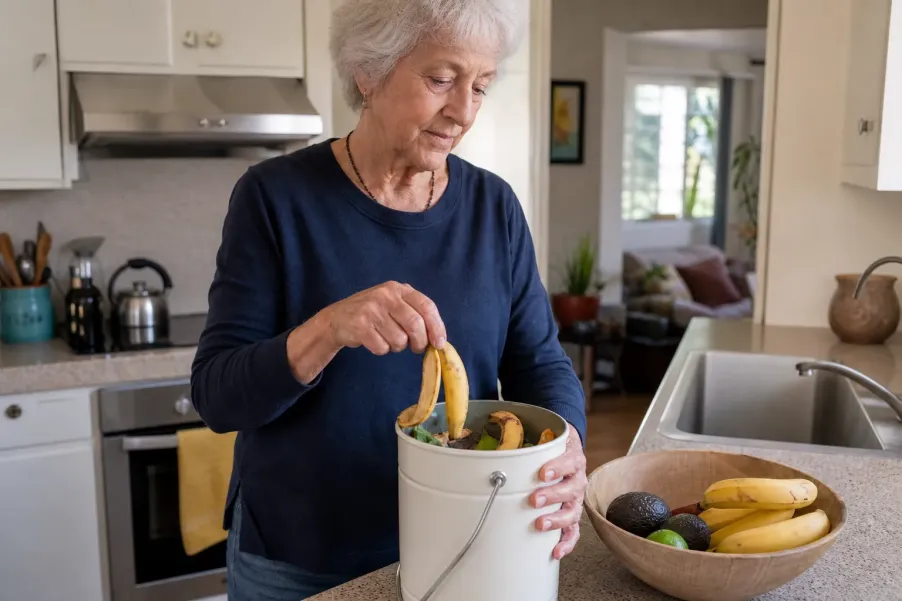
A kitchen food scrap collection routine works best when it is simple enough to repeat every day. For an older adult or family helper in Los Angeles, the first step is not buying a special bin. It is confirming the collection rules for the exact address, then choosing a small indoor container, a comfortable carrying route, and an emptying schedule the household can actually maintain.
Check the local rule first
Los Angeles County includes many cities, buildings, and waste haulers. Accepted materials, liners, containers, and collection days can differ by address.
Choose a small working container
A light pail that is easy to reach and easy to wash is often more useful than a large container that becomes awkward to lift.
Separate food from packaging
Remove produce stickers, twist ties, plastic film, utensils, and other packaging before the scrap reaches the kitchen pail.
Reset before problems build
Empty the pail regularly, clean it, let it dry, and return it to the same spot. Freezer storage can help when local pickup is still days away.
How do you confirm the food-scrap rule for your address?
Start with the city, county program, property manager, or waste hauler that actually serves the home. Do not copy a friend’s routine from another Los Angeles neighborhood. One address may use a green cart for food and yard material, while another building may provide a shared organics container, a separate food-scrap bin, or instructions from a contracted hauler.
CalRecycle’s statewide collection guidance says local programs share the specific sorting rules for their communities and residents should place organic waste in the correct local container. Its collection-system guide explains that California jurisdictions may use different two-container, three-container, split-container, or additional-container systems. That is why the familiar phrase “put it in the green bin” is a starting point, not a complete rule for every property.
Ask four exact questions: Which outdoor or shared container receives food scraps? Which foods and food-soiled paper are accepted? Are bags or liners allowed, required, or prohibited? What day or building routine moves material to collection? Keep the answer near the indoor pail in plain language, but do not turn it into a complicated chart.
If the household cannot identify the provider, a city service route may help. ASF’s MyLA311 service-request checklist explains how City of Los Angeles residents can gather the right details before using that municipal channel. People outside the city should use their own local government or hauler, not MyLA311.
What makes a kitchen collection station easy to use?
The station should be close to the place where scraps are produced, away from a walkway, and reachable without bending deeply or stretching over a hot surface. A countertop corner beside the main preparation area may work. An under-sink location can save space, but only if opening the cabinet and lifting the container remain comfortable.
Choose the smallest container that fits the household’s normal interval between emptying trips. A smaller pail fills sooner, but that can be an advantage: it limits weight, encourages regular emptying, and makes washing easier. Look for a stable base, a wide opening, a smooth washable interior, and a lid that can be used without a difficult latch. No special brand is required.
Walk the full route from the station to the building or curbside container before deciding. Check doors, steps, thresholds, rugs, pets, narrow passages, and the weight of the pail when partly full. The safest route is the one the person can use without carrying an overfilled container or balancing it while opening several doors.
Keep the setup visually simple. The food-scrap pail should not be confused with a pet-food bin, cleaning bucket, or ordinary trash can. A distinct shape or location can help. When a written cue is useful, use a few large-print words based on the verified local rule. ASF’s large-print phone-list routine offers practical guidance for readable household labels without crowding them with private information.
What is a manageable seven-step kitchen food scrap collection routine?
- Start with edible food. Before discarding anything, set aside food that is still safe and intended to be eaten. This routine is for scraps and unwanted food, not a substitute for food-safety judgment.
- Remove non-food items. Take off produce stickers, rubber bands, twist ties, plastic film, utensils, and packaging. Check the local rule before adding coated paper or a liner.
- Place the scrap directly in the pail. Avoid leaving loose scraps on the counter or carrying them across the room by hand. Use a bowl or small plate to move several scraps together when helpful.
- Stop before the pail is heavy. Use a simple fill line, such as halfway or two-thirds full. The correct limit is the one that keeps the trip comfortable and the lid easy to close.
- Move it through the planned route. Carry the pail with both hands when needed, make a second trip instead of overfilling, and ask for help with stairs or a distant shared container.
- Empty only into the verified container. Do not reach into the outdoor cart, compact material by hand, or leave the indoor pail where it can block a walkway.
- Clean, dry, and return. Wash or wipe the pail according to its material, let it dry, and place it back in the same accessible spot so the next use starts clean.
This sequence separates the decision points. “Is this still food we plan to use?” comes before “Is this an accepted scrap?” The local sorting check comes before choosing a liner. The comfortable weight limit comes before collection day. That order prevents one missed detail from turning into a heavy, leaking, or contaminated container.
What can go in the pail, and what needs a local check?
Food scraps commonly include fruit and vegetable peels, coffee grounds, eggshells, spoiled produce, leftovers that will not be eaten, and other food material. Current CalRecycle household guidance gives examples such as produce peels, coffee grounds, bones, and eggshells while emphasizing that local requirements vary.
Do not turn those examples into a universal acceptance list. Meat, bones, dairy, food-soiled paper, tea bags, coffee filters, certified-compostable products, and liners may be handled differently by different programs. Packaging, glass, metal, conventional plastic, pet waste, diapers, household chemicals, and batteries do not become food scraps simply because they were used in a kitchen.
| Material at the counter | First decision | Next step |
|---|---|---|
| Fruit or vegetable peel | Remove stickers, ties, and packaging. | Add it if the local program accepts food scraps. |
| Uneaten prepared food | Decide whether it is still intended and safe to be eaten. | If it is being discarded, follow the local food-scrap rule. |
| Coffee grounds, filter, or tea bag | Separate any plastic or non-compostable parts. | Confirm whether both the food material and filter or bag are accepted. |
| Food-soiled paper or “compostable” serviceware | Check for coatings and local restrictions. | Add only when the address-specific program says it is accepted. |
| Battery, bulb, cleaner, or chemical container | Keep it out of food scraps. | Use the appropriate disposal route; ASF’s household hazardous-waste checklist can help with preparation. |
How can you control odor, moisture, pests, and spills?
Odor control begins with frequency, not perfume. Empty the indoor pail before it is packed, remove residue, and let it dry. Keep the lid and rim clean so they close normally. Do not mix household chemicals into food scraps or use a strong product in a way the container manufacturer does not recommend.
CalRecycle’s Recycling Reimagined food-scrap guidance recommends keeping scraps in a covered container, emptying it regularly, cleaning after use, and using freezer storage as an option before curbside collection. A freezer container can be useful for a small household, warm weather, or a longer gap before pickup. Choose a clearly separated, food-safe container and do not let it interfere with food storage.
If liquid collects, empty the pail sooner and check whether especially wet food can drain safely before disposal. Do not pour fats, oils, or grease down the sink as an odor-control shortcut. If insects or rodents continue despite a clean container and regular emptying, contact the property manager, waste provider, or a qualified pest professional rather than escalating to unsafe home remedies.
How can the routine reduce lifting, bending, and reaching?
Design around the person who will use the routine most often. Raise a low pail to a comfortable shelf, select a lighter container, reduce the fill limit, or schedule more frequent trips. Keep the route well lit and free of loose bags, stools, and rugs. Do not place the pail where it narrows a walkway or requires reaching across a sink or hot appliance.
For a shared outdoor cart, the indoor pail should be small enough to tip without leaning deep into the cart. If the cart lid is heavy, the enclosure is difficult to open, or stairs make the trip unsafe, ask the property manager or service provider what access options are available. Do not assume a specific accommodation exists; request current information for the property.
The same “one easy home for each item” idea appears in ASF’s safer closet setup guide. The goal is not perfect organization. It is reducing repeated awkward movements and making the correct action obvious.
How can a family helper support the routine without taking it over?
A helper can confirm the current local rules, write a short large-print cue, test the carrying route, clean the first container, and agree on a comfortable fill limit. The helper can also check the rule after a move, hauler change, building notice, or replacement cart.
Ask before reorganizing the kitchen. A pail moved to a hidden cabinet may look tidier but become harder to reach. A large “efficient” container may become too heavy. The person using the kitchen should choose the location and be able to explain the routine in their own words.
Keep the handoff specific: “Please empty the pail on Tuesday evening and return it clean” is clearer than “Take care of the recycling.” If several people share the kitchen, agree that packaging is removed before scraps enter the pail and that no one changes liners or bin destinations without checking the local rule.
All Seniors Foundation can help Los Angeles County older adults and families organize general household-support and resource-navigation questions. It does not operate waste collection, determine local compliance, provide pest control, or guarantee a building or hauler’s service.
What should you do after a missed pickup, spill, or sorting mistake?
Missed emptying trip
Do not keep packing the pail. Move accepted scraps to an approved freezer container when appropriate, ask a helper for the next trip, or contact the provider for current instructions.
Leak or spill
Keep people and pets away from the spot, remove the material with ordinary safe cleaning practices, dry the area, and check whether the pail was too full or poorly placed.
Wrong item added
Remove it only when it is visible and safe to pick out from the indoor pail. Never reach into a curbside cart or handle a sharp, leaking, or hazardous item.
Rule changed or is unclear
Pause questionable items and confirm with the city, property manager, or hauler. A short delay is better than contaminating the shared organics container.
After the problem is contained, change one part of the setup: use a smaller fill line, move the pail closer, add a plain-language cue, set a recurring helper handoff, or clean more often. A failed week does not require abandoning the routine. It provides evidence about what was inconvenient.
For more practical household planning resources, browse ASF’s Senior Support Guides. The strongest food-scrap routine is local, light, clean, and easy to restart.
Frequently asked questions
Do all Los Angeles homes put food scraps in a green bin?
No. California programs commonly use green containers for organics, but the exact container, accepted materials, liner rules, and collection process can vary by city, building, and hauler. Confirm the rule for your address.
Do I need to buy a special kitchen compost pail?
No. A small, stable, washable container with an easy lid can work if it suits the household and local liner rules. Prioritize comfortable weight, easy cleaning, and a safe location over a particular product.
Can I use a compostable plastic bag as a liner?
Only if the local program accepts that liner. A compostable label does not guarantee that every facility or hauler can process the bag, so check the current address-specific instructions before using it.
How often should I empty the indoor food-scrap pail?
Empty it before it becomes heavy, leaks, smells, or attracts pests. The interval depends on household volume, weather, storage method, and pickup timing. A smaller pail emptied regularly is often easier to manage.
Can food scraps be kept in the freezer until collection day?
Yes, freezer storage is a recognized odor-control option when space and household food-storage needs allow it. Use a clearly separated suitable container, then move the scraps to the locally approved collection container.
What if the outdoor cart or shared bin is hard to reach?
Use a smaller indoor pail, make more frequent light trips, or ask a trusted helper. Contact the property manager or service provider for current access options rather than lifting an overfilled container or using an unsafe route.
Need help organizing a manageable household routine?
All Seniors Foundation can help Los Angeles County older adults and families organize general household-support and resource-navigation questions. It cannot set local waste rules, provide collection service, resolve enforcement, or guarantee a property accommodation.





