Prepare for a Los Angeles County household hazardous-waste drop-off in five steps: make a no-touch inventory, use the current CleanLA page to choose a collection option, confirm every item, keep products sealed and separated in sturdy boxes, and load them in the trunk away from passengers. Stop and call the responsible agency when anything is leaking, damaged, unidentified, or not clearly accepted.
Check before packing
Collection sites and events can differ. Confirm the current location, hours, resident rules, limits, and accepted items before leaving home.
Keep containers closed
Do not open, sniff, taste, transfer, or combine a product to identify it. Use the original container when it is intact.
Separate unlike items
Use sturdy boxes to keep containers upright and apart. Batteries and electronics should not roll loose beside liquids.
Use the trunk
CleanLA directs residents to place prepared boxes in the trunk, away from passengers, and remove unrelated trunk items before the trip.
Stop on uncertainty
A leaking, bulging, hot, smoking, unlabeled, or unstable item is not a routine packing task. Move away and get official instructions.
What belongs in a household hazardous-waste routine?
Household hazardous waste, often shortened to HHW, includes leftover household products that may catch fire, react, corrode, or contain toxic ingredients. The U.S. Environmental Protection Agency identifies paints, cleaners, oils, batteries, and pesticides as common examples. Electronic waste can include old phones, computers, monitors, and similar devices, but a local program decides exactly what it accepts.
California rules make the ordinary trash or recycling bin the wrong destination for many familiar items. CalRecycle lists batteries, fluorescent lamps, paints, solvents, some chemicals, and electronics among wastes that need special handling. This Article does not ask you to decide whether an unknown chemical is hazardous. It gives you a safer way to identify what needs confirmation.
The practical starting point is a current official local page, not a saved flyer. Los Angeles County Public Works and the Sanitation Districts offer temporary collection events, and the County also points residents to permanent collection centers. Locations, hours, closures, and accepted materials can change, so verify them again for each trip.
Make a 15-minute no-touch inventory
Choose one well-lit walk-through when you are not rushed. Bring a large-print note card or use a phone note, but do not move questionable containers merely to read the back. Write only what is plainly visible from a safe distance: room, product type, container condition, and whether the original label is present.
Scan one area at a time
Look in the garage, laundry area, utility cabinet, workshop, and electronics drawer. Do not climb, reach behind heavy objects, or open a container.
Record the visible facts
Note “sealed paint can,” “household batteries,” or “old phone.” If the label is unreadable or missing, write “unknown” instead of guessing.
Mark the container condition
Use simple words such as intact, rusted, cracked, leaking, swollen, warm, or unknown. The condition decides whether routine transport can continue.
Do not turn this into a whole-house cleanup. The goal is to prepare one verified trip. If another person stores household products, ask before moving anything. The household product recall-check routine can help you verify a product separately; a recall does not automatically tell you how or where to transport it.
For electronics, record the device type and whether its battery appears intact. Protecting personal data is a separate task. Do not power on a swollen, hot, damaged, or wet device to erase information. Ask the collection program or device maker for safe next steps.
Stop immediately for a dangerous condition
Do not touch or transport an item that is hot, smoking, hissing, bulging, actively leaking, giving off strong fumes, or involved in a fire. Move away from the area and follow emergency instructions. Call 911 for an immediate fire, exposure, or life-safety threat. For a non-emergency uncertain item, contact the responsible local collection agency before moving it.
Choose a current Los Angeles County collection route
Open the official CleanLA collection centers page on the day you plan the trip. It explains temporary drive-through events, permanent centers, and links for City of Los Angeles S.A.F.E. Centers. Use the option that currently serves the resident’s address and accepts the listed materials.
- Confirm the date and operating hours. Do not assume a center opens every weekend or that an event repeats at the same location.
- Confirm who may use it. The County program is for household residents. Business-generated waste follows a different process.
- Confirm each item. Read the accepted and excluded lists for the exact site or event. Call when an item is not clearly named.
- Confirm the trip limit. CleanLA currently states a limit of 15 gallons or 125 pounds of household hazardous waste per trip; verify that limit again before loading.
- Confirm appointment rules. CleanLA says most temporary events need no appointment, but another facility or special program may use different rules.
- Save the official page. Keep the current route, address, and phone number available to the driver without copying private household information into a public note.
If you need help navigating a City of Los Angeles service page, the MyLA311 service-request checklist explains how to record a confirmation and avoid duplicate requests. It is not a substitute for CleanLA’s HHW instructions, and 311 should not be used for an emergency.
Pack items without opening, mixing, or leaking
Pack only after the collection option confirms the item. CleanLA instructs residents to keep products in original containers, avoid mixing, group like chemicals, separate unlike chemicals, tighten lids, and use cardboard boxes to reduce spills during transport. Be prepared to leave the boxes and containers at the site.
- Put on only the protection named on the intact product label. Do not improvise chemical-handling equipment or clean a spill as part of trip preparation.
- Check from the outside. A container should be closed, upright, stable, and not leaking. Do not test the cap by forcing it.
- Keep the original container. Never pour leftovers into a drink bottle, food jar, or another product’s container.
- Use separate sturdy boxes. Keep unlike products apart and prevent glass, lamps, batteries, and electronics from shifting.
- Protect battery terminals when the official program directs it. Follow the battery maker or collection site’s current instructions; do not tape a damaged or hot battery as a home repair.
- Keep the inventory card with the driver. Do not put paper inside a box where it can contact a leaking product.
Do not combine small amounts to save space. Two partly full paint cans are still two separate containers. Do not flatten, puncture, crush, drain, or disassemble an item unless the responsible program explicitly instructs you to do so.
Use a ready, confirm, or stop decision aid
Ready to verify and pack
What you know: The item is named on the current accepted list, the original container is intact and closed, and the trip rules are clear.
Action: Keep it upright, separate it in a sturdy box, and add it to the driver’s inventory.
Hold and call
What you know: The label is missing, the item is not clearly listed, or the center’s instructions leave a question.
Action: Leave it undisturbed in a stable location and call the responsible agency. Describe only what you can see without opening it.
Do not self-transport
What you know: The container is leaking, hot, swollen, smoking, unstable, or damaged, or the material may be explosive, radioactive, or otherwise excluded.
Action: Move away and obtain emergency or agency instructions. Do not place it in a vehicle.
Use the business route
What you know: The waste came from a business, paid job, or commercial activity.
Action: Do not take it through the household resident line. Use the business-waste contact shown by CleanLA.
Follow one day-of loading and drop-off sequence
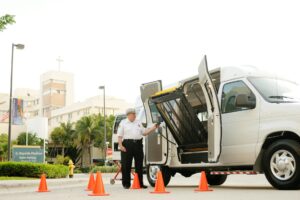
Before loading, check the official page again for a closure, changed event entrance, or updated rule. Use a driver who can remain safely in the vehicle and understand staff directions. If lifting a box would be difficult, ask the program about its process before the trip rather than attempting a heavy lift.
- Remove groceries, mobility equipment, and unrelated belongings from the trunk area that will hold the waste boxes.
- Place each sturdy box flat in the trunk, away from passengers. Keep containers upright and prevent sliding.
- Bring the inventory and current official destination where the driver can read them without handling the boxes.
- Drive directly to the verified site. Do not add errands that leave the vehicle parked with hazardous materials inside.
- At a drive-through event, follow staff directions and remain in the vehicle while trained personnel remove the boxes, as CleanLA instructs.
- Before leaving, ask what to do with any item the site does not accept. Do not place a rejected item in a public bin.
A quick household reminder can be paired with the power-outage flashlight and phone-charging check so spent batteries and damaged devices are noticed. Keep the tasks separate: the outage check identifies items, while the current collection program controls transport and disposal.
Use a four-part family handoff
A useful handoff names the item, its condition, the official route, and the next owner. It avoids “probably accepted” or “just put it in the trunk.”
Example: “We have two sealed paint cans, six household batteries in a small container, and one old phone with no visible damage. I checked today’s CleanLA page and the selected center lists those categories. The boxes are still on the utility table. Please recheck the hours and accepted list before you load them.”
Write the agency name and current phone number in the same large-print format used for the large-print phone list routine. Do not copy account numbers, passwords, medical details, or other private data onto the trip card.
Common mistakes that create an unsafe or wasted trip
- Using an old event flyer: verify the official page again because dates, entrances, closures, and accepted items can change.
- Assuming every center takes the same materials: confirm each item for the selected location.
- Mixing leftovers into one bottle: never combine products or transfer them into food and drink containers.
- Loading a leaking or swollen item: stop and call for instructions; a vehicle is not a safe place to investigate it.
- Putting boxes in the passenger area: use the trunk away from passengers, following the official preparation rules.
- Bringing business waste to a household event: use the separate business-waste route.
- Trying to erase a damaged device: do not power on a hot, wet, swollen, or damaged device merely to remove data.
Primary sources for this checklist
This guide uses the current Los Angeles County Public Works CleanLA collection-center and preparation instructions, CalRecycle’s list of wastes banned from ordinary trash, and the EPA household hazardous-waste overview. Recheck the local official page before every trip because site details and accepted materials can change.
Frequently asked questions
Do Los Angeles County household hazardous-waste events require an appointment?
CleanLA says most temporary drive-through events do not require an appointment, but verify the current event or center page before leaving because rules and closures can change.
How much household hazardous waste can I bring?
CleanLA currently lists a limit of 15 gallons or 125 pounds per trip for household hazardous waste. Confirm the current limit and how it applies to your items before loading.
Can I mix small amounts into one container?
No. Keep products separate and in their original intact containers. Mixing materials can create a dangerous reaction and removes information staff may need.
Where should the boxes go in the car?
CleanLA instructs residents to place sturdy boxes in the trunk away from passengers, remove unrelated trunk items, and remain in the vehicle while trained staff unload at an event.
What if a container is leaking or the item is unknown?
Do not open, move, or load it as a routine drop-off item. Leave the area if needed and contact the responsible agency; call 911 for an immediate fire, exposure, or life-safety threat.
Can a business use a household collection event?
No. Los Angeles County household events do not accept business-generated waste. Use the separate business-waste route linked by CleanLA.
Keep practical support steps easy to find
All Seniors Foundation’s educational guides can help Los Angeles County families organize everyday support tasks. Collection eligibility, packing, transportation, and emergency instructions must still come from the responsible public agency.
Keep special waste out of a furniture request
When a cleanup also includes furniture or a mattress, use the bulky item pickup preparation guide for older adults to confirm the serving provider, item list, appointment, safe set-out route, and request record before moving anything.
Recycling an old phone or computer?
Before using this drop-off routine, follow the e-waste device preparation guide for Los Angeles County to save wanted files, remove accounts and removable media, use the manufacturer reset steps, and confirm the current collection route.