
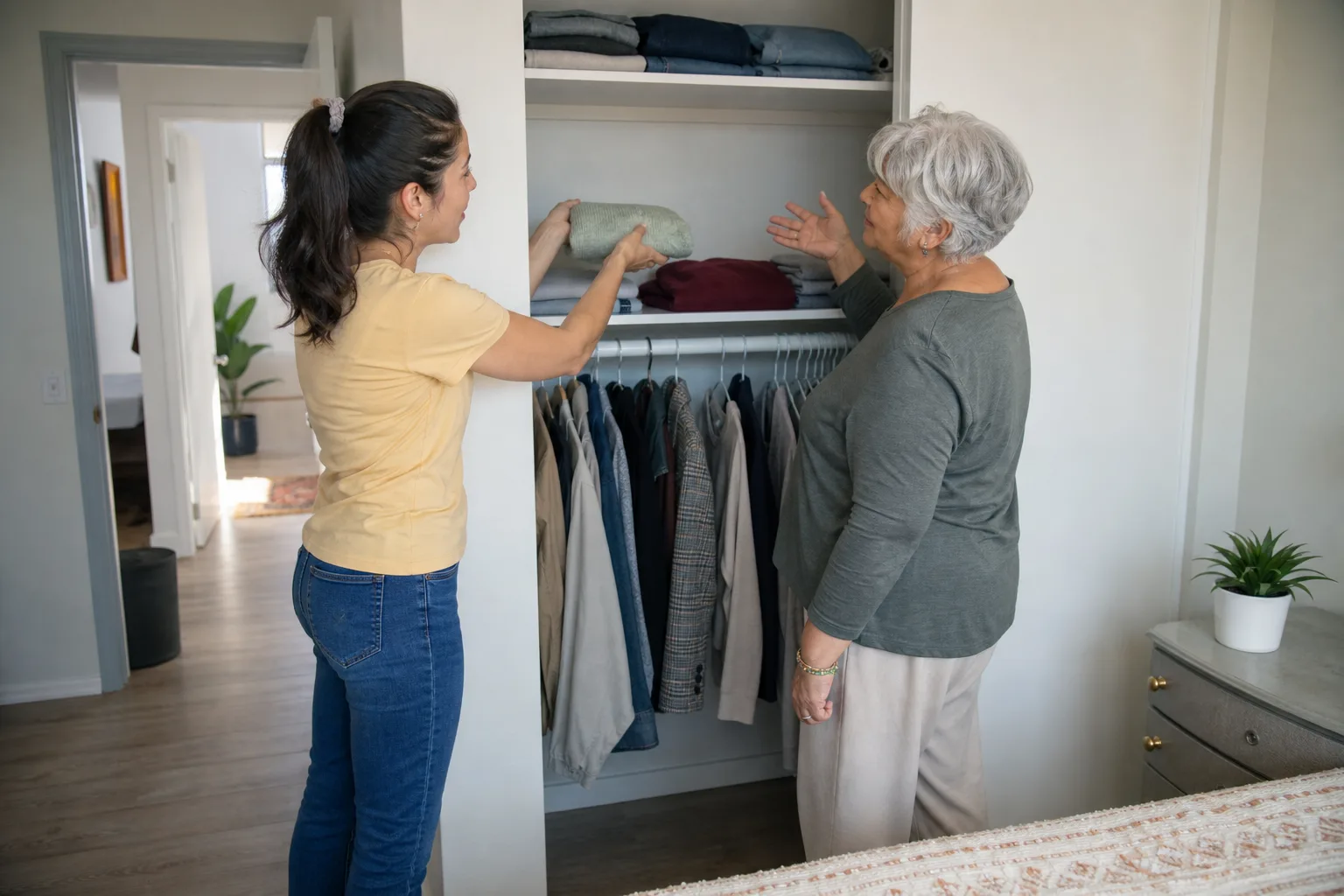
A closet can become harder to use long before anyone calls it a safety problem. A favorite shirt drifts to a high shelf, shoes collect near the doorway, or laundry waits on the floor because the usual storage spot requires an uncomfortable bend. A short, preference-led reset can make the everyday routine clearer without turning the closet into a construction project.
Watch before moving
Notice which items prompt overhead reaching, deep bending, twisting, or a temporary pile. The real routine identifies the useful shelf.
Sort by frequency
Everyday items belong in the easiest comfortable area. Rarely used, heavy, or seasonal items can wait for a helper.
Keep the route clear
Shoes, bags, hampers, and step stools should not narrow the path into or past the closet.
Respect ownership
Organization is not permission to discard belongings, install hardware, or alter a rental without the older adult and property owner’s approval.
What does a safer closet setup mean?
For this guide, a safer closet is one an older adult can use during an ordinary morning without climbing, testing balance, dragging a heavy container, or stepping around stored items. It is also understandable: frequently used clothes have a predictable home, the path is visible, and tasks outside the older adult’s preferred reach have a named helper or next step.
The National Institute on Aging explains that home changes can make a space safer and more accessible for independent living. The Centers for Disease Control and Prevention recommends removing things a person could trip over and improving home lighting. Those principles support a clear closet route, but they do not create one universal shelf height for every person.
Comfortable reach depends on the person’s height, mobility, vision, pain, balance, clothing, and whether the closet is used while standing or seated. This is why the older adult should lead the decision. A family helper can observe, lift, label a verbal plan, or contact the responsible person; the helper should not decide that meaningful belongings are clutter. For broader room-by-room context, use ASF’s senior fall prevention at home guide as a companion, not a substitute for the closet-specific workflow below.
How should you observe the current closet routine?
Choose a normal, unhurried time in daylight. Ask the older adult to describe what they usually retrieve first, where clean laundry goes, where worn items wait, and what becomes difficult during hot, cool, formal, or medical-appointment days. In Los Angeles County, a compact apartment closet may need to hold year-round layers, shoes, linens, and a mobility item in very little space. The goal is not a magazine-perfect closet; it is a repeatable route to the things used most.
Do not ask anyone to demonstrate a risky reach. Observation can be verbal: “Which shelf is uncomfortable?” or “What usually lands on the chair?” If a normal movement causes dizziness, weakness, pain, shortness of breath, or a feeling of unsteadiness, stop the task. The CDC advises people to discuss falls and fall risk with a healthcare professional. A closet reset cannot diagnose the cause of a symptom or prove that a person is safe from falling.
The U.S. Consumer Product Safety Commission advises keeping floors clear and slip resistant, removing items that can cause trips, and avoiding climbing alone. This routine goes further by separating simple organization from work that belongs to a property owner, installer, occupational therapist, or other qualified professional.
How do you complete the seven-step closet reset?
- Name the purpose of this closet. Decide whether it serves daily clothing, linens, outerwear, supplies, or several roles. When a small closet has many jobs, reserve the easiest area for the role used most often.
- Identify the normal path. Start where the person enters the room and follow the route to the door, rod, shelf, and hamper. Look for shoes, bags, doors, baskets, cords, or furniture that make the person turn sideways or step over something. Do not relocate a mobility aid away from the place where it is needed.
- Choose today’s everyday group. Select only the clothes and accessories used most days: common shirts, pants, underwear, sleepwear, a usual jacket, and regularly worn shoes. Ask before touching private items. Do not make donation or disposal decisions during this pass.
- Place everyday items in the preferred reach area. Use a mid-height shelf, reachable rod section, stable drawer, or another location the older adult can use without strain. Put the most frequent items at the front. Avoid deep stacks that require pulling several things down at once.
- Move occasional items to a helper zone. Seasonal bedding, formal clothing, luggage, and rarely used containers can go higher or farther back only when a helper will retrieve them. Keep heavy objects low enough for a qualified helper to control, but never where they block the floor route.
- Create one landing place. Choose one stable hamper, hook, shelf, or chair outside the walking line for clothes that are not ready to be put away. A single agreed landing place reduces the chance that several temporary piles become the new system.
- Practice one ordinary retrieval. Ask the older adult to choose an easy item from the new layout only if they feel steady and want to try. Do not test the upper or lower boundary. End with the closet door, path, lighting, and mobility aid in their normal positions.
If the reset reveals loose shelving, a dark fixture, a sticking door, or another repair need, use the home repair safety checklist to prepare a bounded owner or professional handoff. If the household needs a private record of the condition, the home inventory photo walkthrough explains how to document belongings without publishing private details.
How do the three closet reach zones work?
The zones are task assignments, not medical measurements. They help the household decide who should retrieve or change something. The older adult’s stated comfort is the starting point, and the plan can change after the seven-day review.
| Zone | What belongs there | Who acts | Boundary |
|---|---|---|---|
| Everyday reach | Frequently worn, lightweight clothing and the usual pair of shoes. | The older adult, using the preferred normal routine. | No climbing, deep bending, twisting, or testing balance. |
| Helper reach | Seasonal, formal, spare, or rarely used lightweight items. | A named family helper, caregiver, or other trusted person. | Retrieval is planned; the older adult does not improvise access. |
| Owner or professional action | Heavy containers, unstable shelves, rods, lighting, doors, mounted organizers, or accessibility changes. | The property owner, manager, installer, occupational therapist, or qualified professional as appropriate. | Organization does not authorize repair, electrical work, or rental alteration. |
A helper can place a rarely used item farther away only if the handoff is realistic. “Someone can get it later” is not a plan when no one knows who that person is. Add the name and timing to the household’s normal coordination method. The shared household calendar setup offers a simple way to assign a seasonal swap or repair follow-up without creating duplicate reminders.
What changes in a small apartment or rental?
Small Los Angeles homes often require one closet to serve several purposes. Protect the route first. A narrow path should not become storage simply because the shelves are full. Instead, reduce the number of categories kept in the closet, use another existing stable storage location, or ask for help deciding what can be relocated. Do not block a doorway, electrical panel, vent, heater, or required exit path.
Renters should obtain permission before attaching rods, shelving, hooks, lights, or wall-mounted organizers. A freestanding organizer is not automatically safe; it still needs the correct size, stable placement, and manufacturer instructions. Report loose or damaged built-in components to the landlord or property manager rather than tightening, drilling, or rewiring them during the reset.
Preference matters as much as space. Some people organize by color, others by outfit, texture, season, or the order of a weekly routine. Preserve the system the older adult can remember and use. If family members disagree, make one reversible change and review it rather than emptying the whole closet. The living alone and independence guide offers broader planning ideas, while the caregiver burnout prevention guide can help families divide a larger home project into smaller, named tasks.
What should you check after seven days?
A setup is successful only if it works during ordinary use. After about a week, ask three questions: Which item was still hard to reach? What landed on the floor, bed, or chair? Which location was easy to remember? Keep what worked and change one problem at a time.
Repeat the review after a seasonal clothing change, a move, a new mobility aid, a repair, or a change in the person’s routine. If a fall, near-fall, new unsteadiness, or health concern has occurred, contact a healthcare professional rather than relying on the closet arrangement. Los Angeles County Aging & Disabilities lists current fall-awareness and prevention programs; confirm location, eligibility, schedule, and availability directly with the County.
For additional practical, nonclinical planning topics, browse the Senior Support Guides. Keep this project narrow enough to finish safely. A closet reset should not expand into lifting furniture, installing equipment, or changing every room in one session.
Common mistakes that make a closet reset less useful
Emptying everything at once
A full-room pile blocks the route and makes preference decisions harder. Work one shelf or clothing group at a time.
Choosing by appearance
Uniform bins may look tidy but can hide familiar items or require extra lifting. Ease of use comes before visual symmetry.
Using a stool as storage
Leaving a stool nearby can invite an unplanned climb. Store it away from the closet and reserve high retrieval for a helper.
Discarding without permission
Clothing can carry practical, cultural, and personal meaning. Make every keep, relocate, donate, or discard decision with the owner.
Frequently asked questions
What belongs in the easiest closet reach area?
Keep lightweight clothing and shoes used most often in the older adult’s preferred comfortable area. The right location is one the person can use without climbing, deep bending, twisting, or testing balance.
Should a family helper remove clothing that is rarely used?
No. The older adult should decide what is kept, relocated, donated, or discarded. A helper can offer categories and do the lifting, but should not make surprise decisions about personal belongings.
Can a step stool stay in the closet for high shelves?
Do not make climbing part of the older adult’s everyday closet routine. Put high or rare items in a named helper zone and keep the walking path free of stools and other obstacles.
What if the closet rod or shelf is loose?
Stop using the damaged component and report it to the property owner, manager, installer, or qualified professional. Do not tighten, drill, mount, or rewire anything as part of this organization routine.
How often should the closet setup be reviewed?
Check it after about seven days and after seasonal changes, a move, a repair, a new mobility aid, or a change in routine. Adjust one problem at a time and preserve what already works.
Does a safer closet setup prevent falls?
No setup can guarantee that a fall will not occur. Keeping the route clear and avoiding risky reaches are practical home-safety steps, but falls, near-falls, or unsteadiness should be discussed with a healthcare professional.
Need help organizing the next step?
All Seniors Foundation can help Los Angeles County older adults and families think through general support-navigation questions. It does not provide a balance assessment, closet inspection, repair, installation, tenancy decision, or medical advice.

