
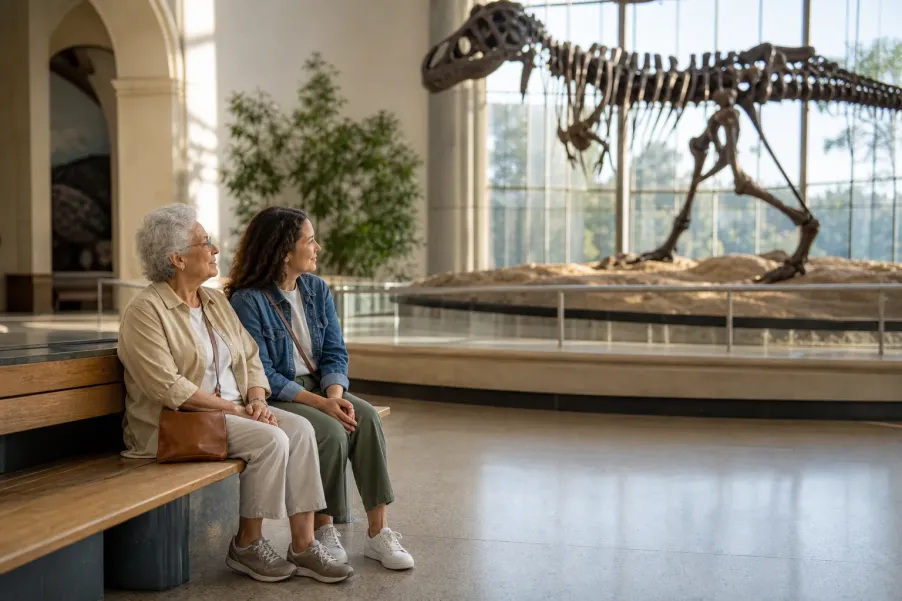
A senior-friendly museum visit works best when you confirm the exact venue, ticket and entry rules, walking route, seating, mobility support, and transportation before leaving. Choose one or two priority exhibits, plan a rest point and easy exit, and let the older visitor set the pace rather than trying to see the entire museum.
Four useful takeaways before choosing a museum
Plan the exact location
A museum name may cover more than one building or entrance. Confirm the street address, open galleries, ticket time, and arrival point for the date you intend to visit.
Ask about the whole route
Accessibility is more than an entrance. Ask about distance, elevators, benches, restrooms, wheelchairs, hearing or language supports, and how to reach the priority exhibit.
Choose less on purpose
One exhibition, one rest, and one optional extra make a real visit. A shorter route often creates more time to enjoy what matters.
Protect an easy exit
Agree that fatigue, noise, crowding, pain, confusion, or a changed route are valid reasons to rest, skip a gallery, or leave without treating the outing as a failure.
How do you choose the exact museum and building?
Start with the older visitor’s interests, not a list of famous attractions. A person who wants to see one dinosaur hall, one photography exhibition, or one local-history room has already given you the center of the plan. Use that priority to identify the museum, campus, building, and gallery that actually hold the desired experience.
Los Angeles County has large campuses, small galleries, outdoor spaces, historic buildings, and museums with multiple locations. Their hours, admission systems, entrances, bag rules, seating, mobility equipment, and exhibit access are not interchangeable. A general search result or an old social post is not enough. Open the venue’s own current visit page and confirm the date before arranging transportation.
Write one visit sentence
Complete this sentence together: “We are going to this building to see this one exhibit, and we expect to stay about this long.” If the sentence is still vague, the outing is not ready for ticketing or transportation.
When the purpose is simply a pleasant local outing, compare the museum plan with the accessible LA County beach visit guide. The better choice is the one that fits the person’s interests, walking tolerance, transportation, weather preference, and desired length that day.
What access details should you confirm before booking?
Ask about the route from arrival to the first place the visitor wants to go. “Is the museum accessible?” is too broad to reveal a long outdoor approach, an elevator detour, limited seating, or equipment that is first come, first served. A short call or email can turn a general access statement into a usable visit plan.
- Entrance and distance: Which entrance should a visitor with limited walking use, and about how far is it from drop-off or parking to admission?
- Vertical travel: Which elevators or ramps reach the priority exhibit, and are any routes temporarily closed?
- Seating and restrooms: Are benches available in or near the galleries, and where is the nearest accessible restroom?
- Mobility equipment: Does the venue lend wheelchairs or other equipment, can it be reserved, and what identification or deposit is required?
- Communication and sensory supports: Are captions, listening devices, ASL or CART services, large-print material, language guides, quiet spaces, or sensory resources available, and must anything be requested in advance?
The Natural History Museum of Los Angeles County accessibility page illustrates why venue-specific confirmation matters: it describes first-come wheelchair and sensory-kit loans, accessible restrooms, language resources, and advance notice for certain communication services. Those details apply to that museum’s current program, not automatically to another venue.
MOCA likewise publishes its own accessibility resources, including lobby wheelchair availability and request information for assisted listening and ASL services. Read the page for the exact location and program you plan to attend, then ask the venue when a detail is essential to the visit.
How should you review tickets, admission, and gallery rules?
Confirm whether general admission needs a date or entry time, whether a special exhibition needs a separate ticket, and what happens if arrival is late. Ask whether a companion or professional personal care attendant has a separate admission process. Do not assume that a senior rate, county-resident rate, free period, membership benefit, or companion policy applies without current venue proof and any required identification.
For example, the LACMA ticket page separates current admission categories and describes a personal care attendant route. The Natural History Museum visit page notes that advance tickets are recommended and that some experiences require add-on admission. These are useful examples of details to check, not promises about another museum or a future date.
Before paying
Verify the venue, date, time, quantity, refund or exchange terms, special-exhibit access, and whether the name on the order must match identification.
Before packing
Check current bag size, food and drink, photography, coat check, mobility-device, service-animal, and medical-item rules on the official venue page.
Before traveling
Save the order confirmation in a form the visitor can retrieve, but do not rely on one phone. Write the venue name, address, and ticket contact separately.
Rules can vary even within one museum. MOCA’s current visitor FAQ, for instance, addresses photography, gallery distance, seating, wheelchairs, restrooms, and re-entry. Treat each rule as venue-owned and date-sensitive.
How do you build a museum route that is short enough to enjoy?
Use a three-part route: priority exhibit, planned rest, exit. Add one optional gallery only after the visitor reaches the rest point and still wants more. This reverses the common pattern of walking through several rooms before reaching the reason for the trip.
Review a current floor map when the venue provides one. Mark the entrance, priority exhibit, elevator if needed, restroom, bench or lounge, and exit. If the map does not show seating or an accessible route clearly, ask visitor services. Screenshots and printed maps can become stale, so confirm major closures or construction close to the visit.
| Visit stage | Simple plan | Decision point |
|---|---|---|
| Arrival | Enter, use the restroom if wanted, and confirm the route with staff. | Does the route match what was planned? |
| Priority exhibit | Spend the first block of energy on the main reason for coming. | Is the visitor still comfortable and interested? |
| Planned rest | Sit, drink permitted water in an allowed area, and check the return route. | Leave, repeat a favorite room, or add one optional stop? |
| Exit | Return before energy is exhausted and keep the pickup details accessible. | Is everyone at the correct exit and meeting point? |
Do not measure success by gallery count. A focused forty-five-minute visit can be more satisfying than a two-hour route that ends in pain, confusion, or a difficult return to the car. Save another exhibition for another day.
What should the arrival and pickup plan include?
Write down the exact passenger drop-off, parking facility, transit stop, or paratransit pickup point. Large cultural campuses may have several entrances separated by streets, plazas, stairs, or construction. “Meet at the front” is not specific enough when two people can reasonably identify different fronts.
For driving, confirm parking availability, payment method, clearance if relevant, elevator access, and the walking route from the garage. For transit, identify the final stop and the path from that stop to the chosen entrance. If using paratransit or a rideshare, choose a legal pickup point the visitor can reach again and wait at safely.
Use the TAP Card balance and reload guide before a Metro trip, or the Access paratransit pickup preparation guide when that service is part of the outing. Confirm current fares, rider rules, schedules, and trip details with the responsible transportation provider.
Create a return card
Keep the museum name, full address, exact exit, pickup point, transportation contact, and companion number together. A large-print paper card can be useful even when the same information is on a phone. It should contain logistics only, not private medical details.
What should a museum companion do and not do?
Agree on roles before leaving. The older visitor chooses the exhibit, pace, rest timing, and whether to continue. A companion can manage tickets, carry a light permitted bag, locate elevators or restrooms, ask staff a question, and watch the time without taking over the experience.
Use direct choices instead of pressure: “Would you like to sit now or after this room?” “Do you want to see the optional gallery or head to the exit?” Avoid “We came all this way” or “There is only one room left.” The distance back to the exit still counts, and the visitor may notice fatigue before it is visible.
If the group may separate, choose one reunion point and time. Keep phones audible if appropriate, but do not rely only on messaging inside a building with weak service. A large-print phone list can support the outing when it contains only the contacts actually needed.
How can the visitor stay comfortable inside the galleries?
Start more slowly than feels necessary. Museum floors are often firm, and quiet standing can be more tiring than expected. Use available benches before fatigue becomes urgent. Keep coats, bags, and audio equipment manageable, and follow staff directions about where food, drink, photography, and mobility devices are allowed.
For hearing, vision, language, or sensory needs, use only supports the venue confirms. Ask whether audio content has captions or transcripts, whether printed information comes in larger type, and whether a quieter space or time is available. A venue may describe quieter periods, but crowd level can still change because of school groups, special events, weather, or nearby activity.
Try the three-room rhythm
Look, pause, choose. Enjoy one room, pause at the transition, then choose whether the next room or the rest point is better. The pause prevents momentum from making the decision automatically.
Bring routine personal items that are permitted and normally used, but do not test a new mobility aid or carrying setup on a complex outing without appropriate instruction. Individual health or mobility questions belong with the person’s clinician or qualified professional.
When should you rest, shorten the route, or leave?
Use a planned check at the first bench or halfway point. Ask about comfort, energy, interest, restroom need, noise, and the walk back. Continue only when the visitor wants to continue and the return route still feels manageable.
| What you notice | Practical response |
|---|---|
| Comfortable, interested, and return route is clear | Add one optional gallery or revisit a favorite object. |
| Tired but steady and a safe seat is nearby | Rest first, then choose between the exit and one nearby stop. |
| Crowding, noise, or route differs from the plan | Ask staff for a quieter or shorter route, or leave. |
| Pain, dizziness, confusion, overheating, or feeling unsafe | Stop the visit and seek appropriate help. Use emergency services for urgent symptoms or immediate danger. |
| The visitor simply wants to go | Go. Preference alone is enough; no explanation or extra gallery is required. |
A museum day can end with a quiet meal or rest at home. If the group wants a separate outdoor outing later, plan it independently with the senior-friendly LA County park picnic guide rather than extending an already demanding museum route.
Senior-friendly museum visit checklist
Before booking
- Name the exact building and priority exhibit.
- Confirm date, hours, ticket type, and entry rules.
- Ask about entrance, distance, elevators, seating, and restrooms.
- Request needed communication or sensory support on time.
- Choose one rest point and one exit rule.
Before leaving
- Recheck the venue’s current visit page.
- Save tickets and write the address separately.
- Confirm parking, transit, drop-off, and pickup.
- Pack only permitted, useful personal items.
- Agree on companion roles and a reunion point.
At the museum
- Confirm the short route with visitor services.
- Visit the priority exhibit before optional rooms.
- Rest before fatigue becomes urgent.
- Use the stop-or-continue check once.
- Return to the exact planned exit with energy left.
For more practical planning resources, browse the Senior Support Guides in Los Angeles. All Seniors Foundation provides educational navigation and community support; each museum and transportation provider must confirm current hours, tickets, accessibility, equipment, rules, parking, transit, and program availability.
Official sources used
- Natural History Museum of Los Angeles County, current Plan Your Visit and Accessibility pages, reviewed August 26, 2026.
- Museum of Contemporary Art Los Angeles, current Accessibility and Visitor FAQ pages, reviewed August 26, 2026.
- Los Angeles County Museum of Art, current Tickets page, reviewed August 26, 2026.
Museum operations can change after publication. Use these official pages as examples of what to verify, then rely on the chosen venue’s current information for the visit date.
Need help organizing the next step?
All Seniors Foundation can help Los Angeles County older adults and families organize questions and find practical support resources. The museum or transportation provider remains the authority for tickets, access, schedules, equipment, and venue rules.
Frequently asked questions
How long should a first museum visit be for an older adult?
There is no universal length. Plan one priority exhibit, one rest point, and a clear exit. A focused forty-five- to ninety-minute visit may be enough, but the person’s comfort, interest, usual walking tolerance, transportation, and return route should decide.
Should I reserve a museum wheelchair in advance?
Ask the exact museum. Some venues lend wheelchairs only on a first-come basis, while others may use different procedures or have none available. Confirm whether reservation is possible, where pickup occurs, and whether identification or another condition applies.
Do Los Angeles museums all offer senior admission discounts?
No single rule applies to every museum. Admission categories, age thresholds, county-resident offers, free periods, identification rules, companion policies, and special-exhibit charges vary. Check the venue’s official ticket page for the intended date before traveling.
What is the best way to avoid too much walking in a museum?
Choose the priority exhibit first, ask for the shortest accessible route, identify an elevator and rest point, and treat every other gallery as optional. Include the distance from parking or drop-off and the walk back to the exit in the plan.
Can a museum companion make access requests for the visitor?
A companion can help ask questions or make a request with the visitor’s agreement, but the older visitor should direct the plan whenever possible. Contact the venue early because some communication, tour, or program supports require advance notice.
Can All Seniors Foundation confirm a museum’s current accessibility?
All Seniors Foundation can help with general planning and resource navigation, but the museum must confirm its current entrance, route, seating, restroom, elevator, equipment, communication support, ticket, parking, and visitor-rule details for the planned date.


