Plan a senior-friendly birdwatching outing around one comfortable viewing spot, a manageable route, and a clear return plan. Confirm the entrance, path surface, seating, restroom access, and current conditions before leaving. Bring only equipment you can use comfortably, watch quietly without approaching nests, and let a few interesting observations count as a complete outing.
What matters most on a first birdwatching outing?
- Choose the observation spot before choosing how far to travel. A seated visit can be the entire plan.
- Ask about the exact route from arrival to viewing area; a general accessibility label leaves important questions unanswered.
- Notice shape, movement, and behavior before worrying about a bird’s name. Binoculars are optional.
- Agree on a return time and a shorter alternative so nobody feels pressured to follow a distant sighting.
Birdwatching can be as simple as watching a tree from a bench. This All Seniors Foundation guide helps older adults and companions in Los Angeles County arrange a modest first outing with a clear purpose. It is a planning guide, not a promise of sightings, an accessibility certification, or a recommendation to exceed anyone’s usual activity limits.
The useful question is not how many species you can find. It is whether the outing gives you a comfortable place to notice something interesting and an easy way home. Start with the version you would still enjoy if the birds stayed distant or the first location did not work.
Which kind of birdwatching outing suits you today?
Choose a format before choosing a destination. One person may want to sit and watch; another may enjoy a short stretch of path with several pauses. Neither format needs to become a hike. A companion can help with logistics without setting the pace or deciding what counts as a worthwhile visit.
One seated spot
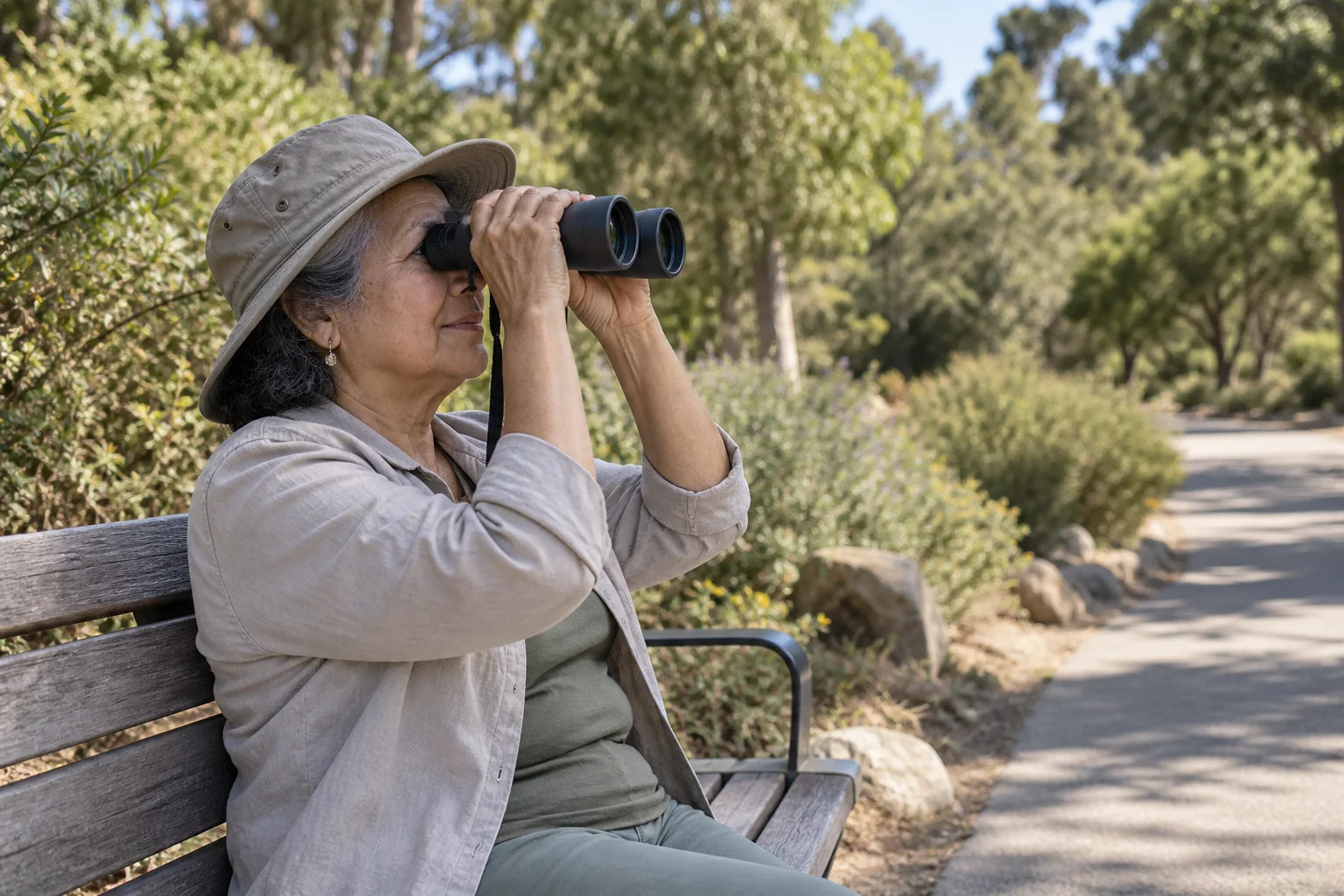
Choose a bench or other permitted seating area with a useful view. Make getting to and from that spot the main travel task. Stay there for the observation portion.
A short out-and-back
Choose a familiar path with an agreed turning point. Return the way you came instead of committing to an unfamiliar loop that may be longer than expected.
A group introduction
Ask the organizer about pace, standing time, route, seating, and leaving early. A beginner label describes birding experience; it does not establish the physical demands of the event.
Use a simple decision rule: if the route or return arrangements are uncertain, shorten the plan before adding equipment or destinations. The outing should fit the person who is attending, including their preferences that day. Nobody needs to explain a private medical history to justify choosing a bench or going home early.
How can you find a sensible starting point in Los Angeles County?
The official LA County Parks Nature Centers and Gardens directory links to individual locations, including Whittier Narrows and Stoneview. Use those individual pages to find current contact details, hours, and program information. A directory entry is a starting point for questions; it does not prove that a particular path, building, or program is available on your visit date.
Pick one candidate near a practical arrival point. Check current closure notices and conditions for that location, then contact the responsible park or nature center about unresolved details. Avoid planning around an old photograph, a remembered schedule, or a social post that never identifies the exact entrance.
Write down the destination name, entrance, meeting point, and return arrangement together. In a large park, the correct street address alone may not identify the parking area closest to your intended viewing spot. Confirm that a companion and any driver are using the same destination details.
If you are also planning a meal, keep that as a separate decision. Our LA County park picnic guide covers picnic preparation. For a coastal alternative, the accessible beach visit guide addresses a different arrival and access setting.
What should you ask before relying on an accessible route?
Birdability’s access guidance explains why specific details matter more than a single accessible label. Relevant features include path surface and slope, steps, parking connections, benches, restrooms, shade, and viewing barriers. A bench separated from a path by difficult ground may not be useful to everyone. Ask about the complete route you intend to use.
A practical call script
“We are planning a short birdwatching visit and may stay at one viewing spot. From the entrance we should use, what is the route like? Are there steps, uneven surfaces, or slopes? Where can we sit, and is a restroom on that same route? Are there closures or changes we should know about?”
Then ask the question that matters most to your own plan. For example, you might need to know whether you can observe comfortably while seated, whether a gate is open during your arrival window, or whether the group returns to the starting point. Record the answer and the date of the conversation.
If staff cannot confirm a detail, mark it unknown. Do not turn a friendly general assurance into a precise measurement. A companion can check the proposed arrival area beforehand when practical, but that earlier check cannot guarantee conditions will remain unchanged. Keep a simpler alternative ready.
What equipment do you actually need to bring?
Audubon’s beginner guidance makes clear that you can start by noticing birds without binoculars. Observation can be the goal even when you cannot identify a species. Try what you already have before deciding whether to buy equipment, and avoid treating a purchase as a requirement for joining in.
If you bring binoculars, practice their controls at home using the manufacturer’s directions. Check whether you can find the view and adjust focus comfortably. Pack them where they are easy to reach after you stop. Put them down before moving along the path, and never look at the sun through binoculars.
Choose a small personal kit: the glasses or usual aids you normally use, weather-appropriate clothing, water appropriate to your usual needs, and a charged phone for your arrangements. Keep hands available for normal movement and support. Leave extra camera equipment at home if carrying it would make the outing cumbersome.
A notebook or identification app is optional. You can remember a few observations and record them afterward. If using a phone, make text easy to read and learn the basic controls before the outing. Keep sound muted; a device should not turn a quiet observation stop into a loud demonstration.
How can you watch birds without knowing their names?
Start by getting settled. Look at one area rather than scanning every direction at once. Audubon suggests noticing features such as size, color, and what a bird is doing. You do not need to identify every bird to enjoy watching it.
Try this original three-observation exercise. First, notice where a bird is: on the ground, on a branch, or passing overhead. Next, notice a movement, such as hopping, walking, or a brief flight. Finally, notice one feature you can actually see, such as an overall shape or a contrasting patch.
Describe only what you observed. “Small bird moving between low branches” is a useful note; a confident species name guessed from a blurry glimpse is less useful. If the bird disappears, let it go. You can watch another part of the same scene without following it into vegetation.
For a shared activity, take turns describing one observation while the other person listens. Use a fixed landmark to explain where you are looking. Avoid repeated urgent pointing that makes someone feel rushed. Comparing two honest descriptions afterward can be more interesting than producing a long list of names.
How do you observe without disturbing birds?
The American Birding Association’s ethics code calls for restraint around birds, especially nests, roosts, and feeding areas, and for minimizing habitat disturbance. It also emphasizes following site rules and respecting other people. For a first outing, choose a quiet viewing position on a permitted path and let distance remain part of the experience.
Do not approach a nest or use food or recorded calls to bring birds closer. If your presence interrupts what an animal is doing, give it more room. A photograph or identification is not a reason to cross a barrier, enter closed habitat, or step onto private property.
Keep shared paths clear. Move bags out of passing space and ask before using equipment another visitor has brought. If someone points out a bird, accept help without expecting them to remain as your guide. If you notice a concerning situation, ask site staff rather than confronting strangers or attempting to handle wildlife.
How should companions agree on pace and the return trip?
Before leaving, decide who is responsible for the destination details and return arrangements. Also agree on a plain phrase such as “Let’s use the shorter plan.” That phrase should be enough to change course without a debate about whether the group has seen enough.
Keep the plan
The intended viewing spot and return route are available, everyone is comfortable, and the agreed visit still fits. Continue at the chosen pace without adding a distant second stop.
Shorten the plan
The location is usable but the visit feels too long or busy. Stay at the first spot, skip extra walking, and bring the return time forward.
Change the day
A closure, unsuitable conditions, uncertain access, or a changed personal preference makes the outing impractical. Leave the visit for another day instead of improvising an unfamiliar route.
Check the destination’s current notices and weather before departure. Conditions can differ across Los Angeles County, so a comfortable departure location does not establish conditions at the park. Follow any personal activity guidance you already have; this article cannot determine what is appropriate for an individual.
What could a short first outing look like?
Here is an illustrative plan, not a recommended exercise duration. An older adult and a relative choose one bench with a view of trees. They confirm how to reach it, agree on a return arrangement, and decide that staying seated is the full outing. They bring binoculars only because the older adult already enjoys using them.
At arrival, they check whether the expected route is still usable. If it is, they settle at the bench and each choose one part of the view. They make the three observations described above, compare what they noticed, and pause without trying to fill every moment with conversation.
If no birds appear, they do not extend the walk to rescue the plan. They can enjoy the setting, leave at the agreed time, and try a different day. If the bench is unavailable, their fallback is another already-confirmed spot or going home, not wandering until they find something suitable.
An organized garden visit involves its own rules and responsibilities. The community garden orientation guide can help with that separate preparation. Do not assume a garden welcomes drop-in wildlife viewing just because it appears nearby on a map.
What should you remember for the next visit?
Afterward, record the entrance you used, what made the spot comfortable, and anything that changed the plan. Keep observations separate from guesses. “The bench was occupied when we arrived” is a useful dated fact; “there is never seating” is a much broader conclusion.
Ask each person one question: what would make a repeat visit easier or more enjoyable? The answer might be less equipment, a different meeting point, fewer stops, or more quiet time. Change one practical detail before planning a more ambitious outing.
The All Seniors Foundation support guides offer related planning resources. Confirm any program, transportation arrangement, equipment loan, or assistance directly with the responsible organization. This guide does not establish that ASF or a park provides an escorted birdwatching service.
Common questions about a first birdwatching outing
Can I participate without binoculars?
Yes. Watch movement and behavior from a comfortable spot and describe what you notice. Borrowing or buying equipment can wait until you know whether you want it.
Is a beginner bird walk necessarily easy to walk?
No. Beginner usually refers to birding experience. Ask about distance, surfaces, standing time, seating, pace, and whether you can leave early before deciding to attend.
What if I cannot identify a bird?
Record a simple description and leave the identification uncertain. An enjoyable observation does not require a species name, photograph, or completed checklist.
Should I share the location of a nest I notice?
Avoid publicizing precise nest locations or encouraging others to approach. Ask site staff how to handle an observation that may involve sensitive habitat.
Can a companion go ahead while I stay at a bench?
Only if everyone freely agrees and the arrangement fits their needs. Decide the meeting point and return plan beforehand; staying together is also a complete plan.
Does All Seniors Foundation organize the outings described here?
This article is an educational planning resource. It does not advertise an ASF birdwatching trip or guarantee escorts, transportation, equipment, park access, or program availability.
Sources for the planning decisions in this guide
- LA County Parks: Nature Centers and Gardens provides the official local directory for finding individual facility pages and contacts.
- Birdability: Access Considerations explains the physical features to ask about when evaluating a birding route.
- Audubon: How to Start Birding supports observing first and building identification skills gradually.
- American Birding Association: Code of Birding Ethics sets out respectful observation and habitat principles.
Sources reviewed September 8, 2026. Recheck current site conditions, closures, and program details before a visit.
Need help identifying a practical next question?
Tell us what part of planning is unclear. Ask about current guidance and resources, and confirm any specific assistance before making arrangements.