A smooth self-serve mulch pickup starts with a current location check, a small volume goal, sturdy containers, and a clear lifting plan. City of Los Angeles residents should confirm supply before leaving, bring their own shovel, protect the vehicle, and divide loading and unloading into manageable steps instead of trying to fill every available space.
What should you know before a mulch pickup?
- The City program is self-serve, so the visitor supplies the shovel, containers, loading effort, and transportation.
- A verified small load is usually more useful than an ambitious load that is difficult to secure, unload, or spread.
- Mulch, compost, and soil amendment are different materials; confirm what is available and what the planting area actually needs.
- Hours, delivery days, product, and supply can change. Recheck the official page and call the responsible location when availability matters.
Free material can sound like a simple errand, but a bulk pickup combines route planning, loose material, repetitive shoveling, container weight, and a second round of work at home. For an older adult, the best plan is not necessarily the plan that collects the most mulch. It is the plan that keeps every step understandable and leaves enough energy to unload without rushing.
This guide focuses on the current LA Sanitation & Environment self-serve program for City of Los Angeles residents. People who live elsewhere in Los Angeles County should check with their own city, waste hauler, or public works department rather than assuming the City program applies. For a broader outdoor planning example, the community garden orientation guide explains how to clarify access, roles, and physical demands before a visit.
How do you confirm the right mulch site before leaving?
Begin on the official LASAN Free Mulch and TOPGRO Compost page on the day of the trip. Confirm that the pickup option is described as self-serve, that the location and hours still fit your plan, and that the material you want is expected there. The official page advises visitors to bring their own shovel and sturdy containers and provides a call route for checking whether a location has run out.
Confirm eligibility
The current free program is presented for City of Los Angeles residents. A Los Angeles County mailing address does not always mean the property is inside the City.
Confirm today’s details
Read the current location notes and call when a wasted trip would be difficult. Do not rely on an old flyer, saved map pin, or remembered delivery day.
Confirm the material
Ask whether the pile is mulch, ground yard trimmings, compost, or a soil amendment. These products are not interchangeable in every garden plan.
Save the address in the driver’s navigation app, but also write the site name and return route in a simple note. If an older adult is traveling with a helper, agree on who will drive and who will call before the trip. A family member can use the senior support call checklist as a model for keeping the questions short and specific.
How much mulch should you plan to collect?
Work backward from the area at home, not from the vehicle’s maximum capacity. Measure the approximate length and width of the bed, decide where mulch will stop, and note whether existing material already covers part of the soil. UC Agriculture and Natural Resources explains that volume depends on surface area and desired depth. LASAN gives a useful scale reference: one cubic yard covers roughly 324 square feet at one inch deep.
That reference does not mean you should collect a cubic yard. A few smaller tubs may be the sensible first trip. A container that is comfortable when empty can become awkward when filled with damp or densely packed material. Choose a limit by number of containers, and stop when that limit is reached even if more material is available.
| Planning question | Lower-load choice | Reason to pause |
|---|---|---|
| How large is the first area? | Start with one bed or one tree zone. | The destination is not measured or prepared. |
| Who will unload? | Use more small containers instead of one large bin. | The return helper is unavailable. |
| Where will material rest? | Choose a tarp-covered spot near the work area. | The only option blocks a walkway or exit. |
| What if supply differs? | Accept a smaller load or leave without loading. | The material is not the type expected. |
What gear makes a self-serve pickup easier?
Use sturdy containers with intact handles or reinforced rims. Several medium containers are usually easier to position than one oversized tote. Add a shovel suited to loose material, work gloves, closed-toe shoes with dependable traction, drinking water, and a tarp or cargo liner. Bring a second tarp or cover for the loaded material if the vehicle setup requires containment.
- Containers: inspect for cracks, weak handles, or lids that no longer fit.
- Shovel: choose a tool the loader can control without overreaching.
- Vehicle protection: cover the cargo floor and keep mulch away from seat tracks and passenger areas.
- Personal basics: wear sun protection appropriate to the day and bring water for everyone.
- Cleanup: pack a small brush or towel for loose chips, soil, and footwear.
Do not count on site staff, tools, bags, loading assistance, shade, seating, or restroom access unless the responsible agency confirms them. If the trip depends on transportation help, discuss the loose-material plan with the driver before departure. The Free Senior Help Guide can support broader resource navigation, but All Seniors Foundation does not operate LASAN pickup sites or promise transportation, lifting, or gardening services.
How should an older adult and helper divide the work?
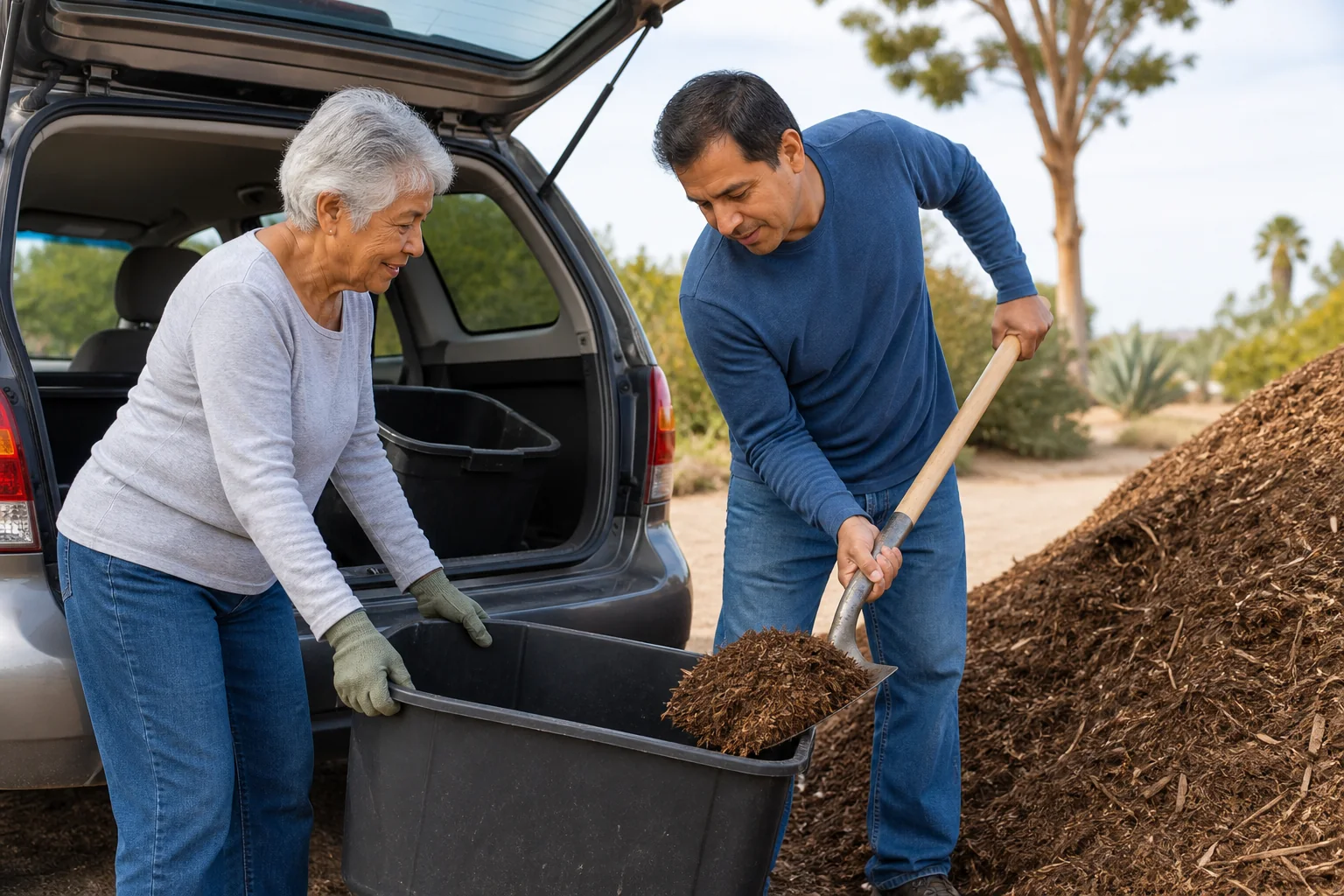
Assign roles before anyone picks up a shovel. One person can stabilize empty containers, count filled containers, keep the path clear, and watch the agreed load limit. The other person can shovel and place containers in the cargo area. If both people load, use short turns rather than continuing until fatigue becomes obvious.
Set the limit
Name the maximum number of containers and the time you want to leave.
Keep one clear path
Place empty and full containers where no one must step over them.
Use a stop signal
Agree that either person can stop the job without debate if the load or footing feels wrong.
A helper should not assume that “supervising” means the older adult must keep working. The useful role may be confirming details, labeling destinations at home, opening gates, or keeping track of containers. If pain, dizziness, shortness of breath, weakness, unstable footing, or unusual fatigue develops, stop. This article is educational planning information, not medical or lifting advice.
How do you load and secure loose mulch?
Park only where the site directs and keep doors, ramps, and traffic lanes clear. Place the cargo liner before loading begins. Fill containers gradually, test the weight before topping them off, and leave enough grip space for two hands. Avoid twisting while holding a load; reposition the feet first or use a second person.
Distribute containers so they cannot slide into a passenger area. Close or cover them when practical, and do not stack them so high that they interfere with the driver’s view. The driver remains responsible for cargo and vehicle safety. If the vehicle is not suited to carrying loose material securely, reduce the load or make a different plan rather than improvising at the site.
A useful 60-second check before driving away
Count the containers, look for spilled material near pedals or seats, confirm that the rear view is clear, test that each container is stable, and agree on where the load will be placed at home. A short check protects the return trip from becoming the most stressful part of the errand.
What should be ready before the load comes home?
Prepare the unloading route before leaving for the pickup. Move hoses, mats, toys, or pots that could catch a foot. Choose a temporary landing area that does not narrow a walkway, block a gate, or cover a drain. If spreading will happen later, keep the material contained and avoid leaving filled tubs where rain or irrigation could make them heavier.
Confirm the intended use before applying the material. UC guidance emphasizes keeping mulch away from trunks and plant stems and adjusting depth to the material and site. Mulch generally belongs on the surface; compost or soil amendment may have a different purpose. Ask a qualified local gardening resource when plant condition, drainage, wildfire defensible-space rules, termites, or an unfamiliar material changes the decision.
For a household task that reveals a larger access or repair issue, the home repair planning guide for seniors offers a way to document the concern without turning one errand into an unplanned project.
What common mulch-pickup mistakes should you avoid?
- Leaving with an old location list. Official hours, pile locations, and availability can change.
- Choosing volume by vehicle size. The real constraint may be container weight or the unloading route.
- Assuming mulch and compost are the same. Confirm the product before loading or applying it.
- Depending on unconfirmed help. Treat staff loading, tools, delivery, and inventory as unavailable unless verified.
- Filling containers to the rim. Leave grip space and keep the load within the team’s agreed limit.
- Planning only the outbound trip. Unloading, temporary storage, and application require their own clear path.
Official sources to check
- LA Sanitation & Environment: Free Mulch and TOPGRO Compost for current eligibility, self-serve instructions, locations, hours, product notes, and availability contact information.
- UC Agriculture and Natural Resources: Applying Mulch for area-and-depth calculations and placement cautions.
- UC Master Gardener Program: Mulch for material distinctions and general application guidance.
Check the responsible agency’s current page before acting. This guide does not replace site rules, gardening advice for a particular property, vehicle instructions, or professional guidance.
Frequently asked questions
Is Los Angeles free mulch available to every Los Angeles County resident?
The current LASAN page describes the free material as available to City of Los Angeles residents. People elsewhere in Los Angeles County should check with their own city, public works department, or waste hauler for local programs and requirements.
Will someone at the site load the mulch for me?
Do not plan on loading help. LASAN describes the locations as self-serve and tells visitors to bring their own shovel and sturdy containers or pickup truck. Confirm any needed accommodation directly before traveling.
How can I tell how much mulch to collect?
Measure the area you intend to cover, choose an appropriate depth for the material and planting situation, and then reduce the pickup goal to what can be loaded, secured, unloaded, and spread comfortably. A small first load is a reasonable test.
Are mulch and TOPGRO compost the same thing?
No. LASAN lists several products with different materials and intended uses, including surface mulch and soil amendments. Confirm the pile and product before loading, and do not assume one product should be applied like another.
Should mulch touch a tree trunk or plant stem?
UC guidance advises keeping mulch away from trunks and stems rather than piling it against them. The suitable depth and spacing depend on the material, plant, drainage, and site conditions, so check current gardening guidance for the specific area.
What if the load feels too heavy after I start?
Stop loading, reduce the amount, and reorganize the plan. Free material is not a reason to exceed a comfortable limit. Leave enough capacity for secure driving and for unloading the same containers after returning home.
Need help organizing a broader senior-support question?
All Seniors Foundation can help Los Angeles County older adults and families navigate general support questions. It does not operate municipal mulch sites or guarantee transportation, loading, inventory, or gardening services.