
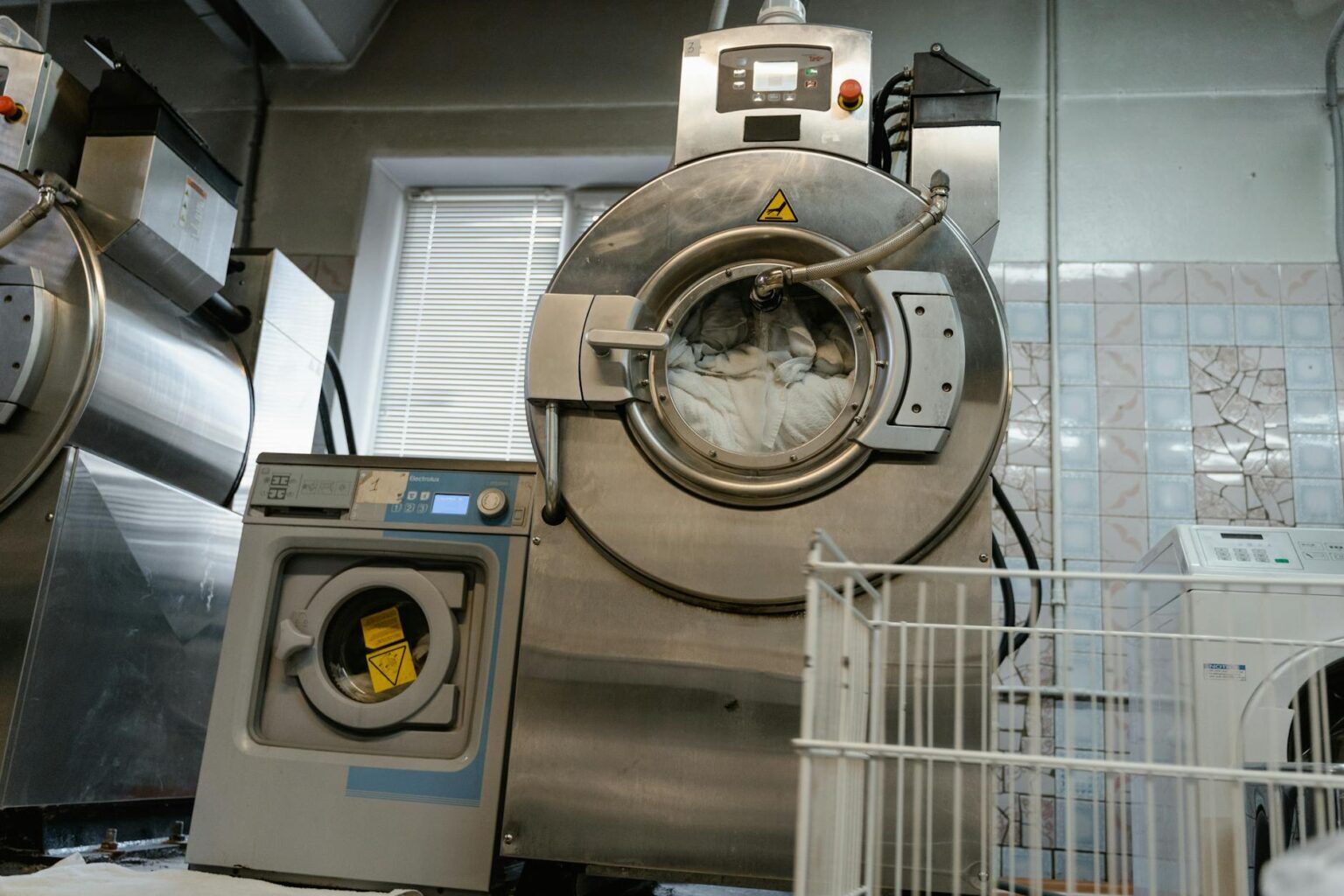
One label check · one compatible load
A laundry care label check for older adults in Los Angeles County starts before the washer opens. Read every garment’s written care route, group only items with compatible washing and drying instructions, and place anything uncertain in a HOLD pile. Then choose a machine cycle that follows every label and the appliance manual, and record the result for next time.
All Seniors Foundation created this educational routine for an older adult handling a small laundry task or for a trusted helper participating with permission. The goal is not to memorize symbols, rescue damaged clothing, or make someone finish a load. It is to replace guessing with a short written check that can be stopped at any point.
This Article does not tell a reader to override a garment label, machine manual, shared laundry-room rule, or professional cleaner. It also does not confirm that All Seniors Foundation provides laundry, appliance, or dry-cleaning services. Use the exact instructions attached to the item and the current controls on the machine in front of you.
Read before sorting
Find the permanent care label on every item and copy the written wash, dry, and warning terms that affect this load.
Match the strictest route
Group items only when one planned method satisfies every label. Separate hand-wash, professional-care, and uncertain pieces.
Let HOLD be a success
A missing, unreadable, detached, or conflicting label is a reason to pause that item—not a reason to experiment.
Leave a repeat note
Record the exact cycle, temperature words, drying route, and anything held so the next load starts with evidence.
What does a clothing care label actually tell you?
A care label is the manufacturer’s regular-care instruction for a garment. The Federal Trade Commission’s Care Labeling Rule requires covered manufacturers and importers to provide a washing or dry-cleaning route and the warnings needed to avoid expected harm. When washing is the stated route, the instruction considers washing method and temperature, drying, bleaching, ironing, and relevant warnings.
That does not mean every label lists every word. Under the rule, silence can have a specific meaning in some instructions, and a warning may use terms such as do not, no, or only. This household routine therefore does not invent missing instructions or translate an unfamiliar symbol from memory. It copies the exact written terms and holds the item when the route is not clear enough to follow.
The FTC also distinguishes washing from dry-cleaning instructions. If a label names professional care, a solvent, hand washing, separate washing, line drying, flat drying, low heat, no bleach, or no iron, treat those words as task boundaries. Do not shorten them into “probably delicate.” Keep the item out of the planned load unless the selected method satisfies the complete route.
Who should use a one-load label routine, and when?
This routine fits a small group of ordinary clothes whose labels can be found and read. It can help when an older adult is using a different washer, sharing a laundry room, trying to repeat a successful load, or deciding what a helper may wash. It also works as a narrow household handoff: the owner keeps the decisions, while the helper reads aloud, writes, or moves only the items the owner approves.
Choose a time when no one is rushing and the machine is empty. Start with a manageable group, not every hamper in the home. Put on the usual reading glasses or use permitted magnification if needed, and bring the current washer and dryer instructions. A building notice, posted machine rule, or appliance manual may limit load size, products, cycles, or operating steps even when the garment labels match.
Stop when a label cannot be read, an item feels too heavy or awkward to handle, the machine controls are unfamiliar, or the person no longer wants to continue. For broader household planning, see ASF’s living-alone independence guide. To understand what homemaking support may include without assuming current availability, use the homemaker and homemaking services guide.
How do you prepare the READ FIRST card?
Use large, high-contrast writing. Make one row for each item or for identical items with the same attached label. Write only what is visible. If a helper takes a reference photo, the owner should agree first, and the frame should exclude faces, addresses, documents, medication labels, account screens, and unrelated belongings.
READ FIRST Five label fields
- Item: plain description, such as blue shirt
- Wash method: machine, hand, professional, do not wash, or exact wording
- Water: cold, warm, hot, temperature number, or not stated
- Drying: tumble and heat level, line, flat, drip, professional, or exact wording
- Bleach: any stated permission or warning
- Iron: any stated temperature or warning
- Other warning: separately, like colors, inside out, no wring, or exact words
- Decision: LOAD, SEPARATE, HOLD, or ASK
Do not cut out a permanent label to make it easier to read. The FTC rule is designed so care information can remain available through the useful life of the garment. If the label is folded or sewn at one end, gently expose the readable side without pulling seams. If it is detached, keep it with the item only when the owner can confidently match it; otherwise mark the item HOLD.
Keep the card beside the sorted clothes, not on top of the washer where it may get wet. The card is a temporary task aid, not a guarantee that the fabric, machine, or cleaning result will behave a certain way.
How do you sort one compatible laundry load?
Begin with the care route, then consider color, fabric weight, and the machine manual. The planned washer setting must meet every included item’s instructions. One shirt that requires a different method can move to SEPARATE or HOLD without blocking the rest of the load.
| Pile | What belongs here | Next action | What not to assume |
|---|---|---|---|
| LOAD | Every label permits the same planned wash method, temperature, warnings, and compatible drying route | Check machine capacity and controls | Similar color alone does not prove compatibility |
| SEPARATE | Readable instructions require a different color group, cycle, temperature, drying route, or isolated wash | Plan another clearly matched load | “Delicate” is not a substitute for exact terms |
| HOLD | Label is missing, unreadable, detached, contradictory, or does not match an available control | Keep dry and unchanged while confirming | Past success does not replace current evidence |
| ASK | Professional care, unfamiliar wording, appliance uncertainty, or a building rule needs clarification | Use the manufacturer, appliance manual, building contact, or responsible professional | A helper should not improvise authority |
Los Angeles Department of Water and Power currently recommends washing one full load instead of two half loads as a conservation step. Apply that advice only after the compatible group is clear and only within the machine’s stated capacity. “Full” does not mean packed tightly or beyond the appliance instructions.
ENERGY STAR advises full loads when practical and says cold water generally reduces washing energy. The garment labels still decide whether cold water and the chosen cycle are permitted, and the machine manual decides the appropriate load level. A small compatible load is better than adding an uncertain item merely to fill space.
How do you complete the laundry care label check for older adults?
- Ask permission. Confirm which items may be handled, whether a helper may read or photograph labels, and whether the owner wants to run the machine today.
- Find every label. Turn each approved item only as much as needed, copy the exact care wording, and return it to a visible pile.
- Build the four piles. Place each item in LOAD, SEPARATE, HOLD, or ASK. Do not use one item’s instructions for another item that merely looks similar.
- Choose one shared route. State the planned method aloud: for example, machine wash cold on the named cycle, then dry using the compatible route. Recheck every LOAD label against that sentence.
- Check the machine. Confirm that the cycle, temperature, capacity, door or lid, and posted room rules match the plan. Follow the appliance manual for loading and products; this Article does not supply machine-specific directions.
- Start only the agreed load. Keep SEPARATE, HOLD, and ASK items outside the machine. If a control does not match the plan, stop before pressing start.
- Record and finish. Write the exact cycle and temperature used, the planned drying route, what stayed out, and one next question. Keep the note only as long as it remains useful.
A new helper may also benefit from the ASF first in-home care visit checklist, which emphasizes roles and boundaries before a task begins. For a separate food-shopping handoff, use the shared grocery list and delivery checklist rather than mixing household systems.
What can an older adult or helper say before washing?
The script should keep control with the clothing owner and make uncertainty easy to name. It is more useful than “I always wash everything this way” because it identifies the exact item and the exact decision.
A helper should not pressure the owner to include an item, discard a detached label, choose professional cleaning, purchase a product, or reinterpret a warning. If the owner says stop, return the clothing to the agreed place and stop. If physical handling, vision, memory, pain, balance, or another functional concern makes the task unsafe, this Article is not an assessment or treatment plan; contact the appropriate qualified professional.
When asking a manufacturer or professional cleaner a question, record the garment brand only if it is visible, the exact label text, the material information if present, and the specific conflict. Do not share unrelated personal information. A focused request might be: “The label says (exact words), but the available machine shows (exact controls). Which current instruction applies to this item?”
How do you finish with LOAD, HOLD, or ASK?
FINISH LOAD / HOLD / ASK
- LOAD: Every included label and the machine manual support the same planned route. Record the exact controls before starting.
- HOLD: One or more items remain uncertain. Leave them dry, separate, and unchanged while the rest of the compatible load proceeds.
- ASK: Save the exact label wording and the exact point of confusion for the manufacturer, appliance manual, building contact, or responsible professional.
After the cycle, follow each item’s compatible drying route rather than treating the whole washer load as automatically dryer-compatible. An item may share a wash method but require flat, line, low-heat, or another drying instruction. If the group separates after washing, update the note so the next routine accounts for that difference before the washer starts.
Record only repeatable facts: items grouped, exact care words, cycle name, temperature label, drying route, and held questions. Do not call a result “safe for everyone,” promise that clothing will not change, or turn one successful load into a rule for every fabric. For a broader household check-in, ASF’s quality-of-life planning guide can help organize separate daily-life questions.
Place the note somewhere the owner chooses, or discard it after the task. The Senior Support Guides hub collects other practical ASF planning resources when another household question needs its own bounded routine.
What common laundry-label mistakes should you avoid?
- Sorting only by color. Color is not a complete care route; compare washing, drying, and warnings too.
- Guessing an unfamiliar symbol. Use written instructions or a current authoritative source for that exact label system, or hold the item.
- Treating “cold” as universal. Energy advice never overrides hand-wash, professional-care, separate, or do-not-wash directions.
- Overfilling for efficiency. A compatible full load still stays within the appliance manual and posted laundry-room rules.
- Adding a late item without checking. Read and classify every item before it enters the machine.
- Assuming wash compatibility means dryer compatibility. Recheck the drying route for each item.
- Letting a helper take over. The owner decides what may be handled, photographed, washed, held, or stopped.
- Using this Article as professional advice. It does not diagnose functional needs, repair equipment, select chemicals, interpret every symbol, or replace a garment maker or professional cleaner.
Do not combine or substitute cleaning products based on this Article. Do not reach into, move, repair, reset, or bypass a machine that is operating, locked, damaged, leaking, unusually hot, making an unexpected noise, or displaying an error. Stop and follow the appliance, facility, emergency, or professional route appropriate to the actual situation.
Official sources behind this routine
- FTC Care Labeling Rule, 16 CFR Part 423 — federal requirements for regular garment care instructions and warnings.
- FTC Clothes Captioning guide — plain-language explanation of washing, drying, bleaching, ironing, and warning components.
- ENERGY STAR clothes-washer guidance — current federal efficiency guidance for load size, cold water, and following manufacturer maintenance instructions.
- Los Angeles Department of Water and Power conservation tips — current local guidance favoring one full laundry load over two half loads.
Sources were checked for this educational guide on July 14, 2026. Rules, machine controls, care wording, and local guidance can change, so confirm the current instruction for the exact garment, appliance, and location.
Need help organizing a broader support question?
All Seniors Foundation can help Los Angeles County older adults and families organize general support questions and identify a sensible next conversation. This Article does not confirm service availability, perform laundry, choose cleaning products, interpret every care label, or repair appliances.
Frequently asked questions
What should I do if a clothing care label is missing or unreadable?
Put the item in HOLD and leave it unchanged. Do not borrow instructions from a similar-looking garment. If useful, ask the manufacturer or a responsible professional using the item’s visible brand, material information, and the specific care question.
Can cold-water energy advice override a garment label?
No. General efficiency guidance does not override the attached care route. Use cold water only when every item in the planned load permits it and the washer instructions support the selected cycle and load.
Does “full load” mean filling the washer completely?
No. A full compatible load remains within the appliance manufacturer’s capacity and loading instructions. Do not pack a machine tightly or add an uncertain item simply to increase the load size.
Can items washed together always be dried together?
No. Items that share a washing route may have different drying instructions. Recheck each label before drying and separate flat-dry, line-dry, low-heat, professional-care, or other distinct routes.
May a helper photograph a care label?
Only with the clothing owner’s permission. Frame the label and item, exclude faces and unrelated private information, use the image only for the agreed task, and delete it when it is no longer needed.
What if the care label and available machine controls do not match?
Do not choose the closest-looking control by guess. Put the item in HOLD, copy the exact label wording and machine options, and use the current appliance manual, garment manufacturer, building contact, or responsible professional to clarify the route.
