
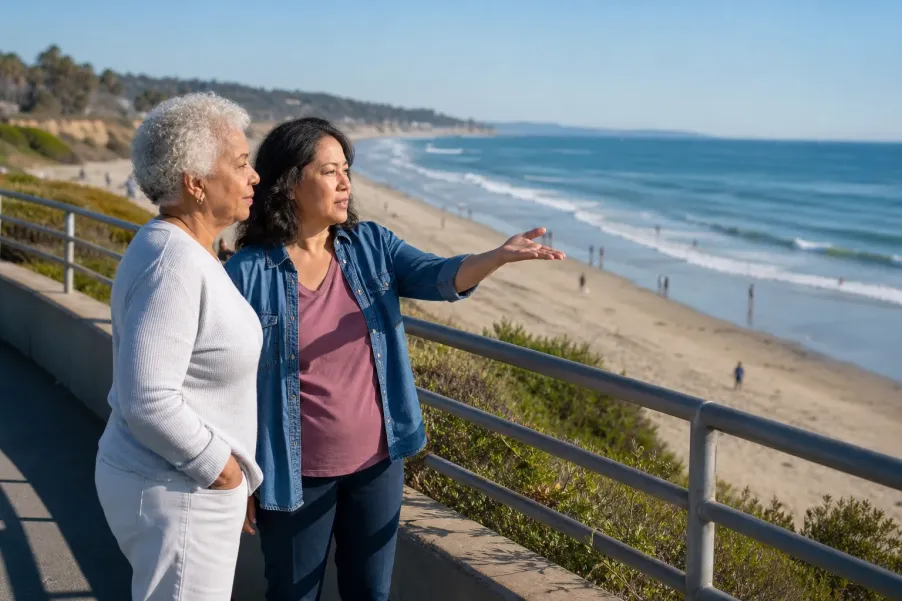
Before a Los Angeles County beach visit, check the County Public Health beach-water map and current notices for the exact location, read any warning, closure, or rain advisory, and confirm the status again shortly before leaving. Follow signs at the beach. If water contact is discouraged, choose a dry-land visit or a different location instead.
Key takeaways
- Use Los Angeles County Public Health for the current local water-contact decision; a weekly grade or an old search result is not the same thing.
- Match the notice to the exact beach area or sampling point because one affected location does not automatically describe the entire coastline.
- Separate the plan to enter the water from the plan to enjoy the sand, promenade, view, or picnic area.
- Recheck close to departure and obey posted signs, since conditions and official instructions can change after a trip is planned.
Why should you check beach water quality before leaving home?
A beach plan can be made days in advance, while a water-use notice can be issued or removed much closer to the visit. The important question is not whether a beach is generally popular or received a favorable historical grade. It is whether the responsible local health agency currently advises people to avoid water contact at the specific place you expect to visit.
This distinction matters for older adults and family helpers because a last-minute change may affect transportation, walking distance, medication timing, shade, restroom access, and the amount of help needed. A short status check gives the household time to choose a realistic alternative instead of trying to redesign the outing in a parking lot.
The check is educational trip planning, not a guarantee that unposted water is risk-free. Conditions can change, testing reflects particular locations and times, and signs at the beach remain important. Anyone with a health concern about ocean-water exposure should ask their own qualified clinician for personal guidance.
Which official source should you use for a same-day decision?
Start with the Los Angeles County Department of Public Health beach-water page. It provides current local notices, a testing map, explanations of warnings and closures, rain-advisory information, and the County hotline. The State Water Resources Control Board explains the broader monitoring system, but it also directs visitors to local health agencies for current postings and closures.
First choice: County status
Look for the exact beach name, nearby landmark, drain, pier, creek, or sampling point. Read the geographic limits of the notice instead of assuming the whole beach has one status.
Backup: County hotline
If the map is difficult to use, call the beach-water hotline shown on the County page. Write down the location you asked about and when you checked.
At the beach: posted signs
Inspect signs near the access point and water. A saved screenshot from home does not override a newer sign or instruction at the location.
If you are also arranging parking, mobility support, or a companion, use our accessible Los Angeles County beach visit guide as a separate planning tool. Water quality and physical access are two different checks; passing one does not prove the other.
What is the difference between a warning, closure, and rain advisory?
The wording matters because each notice answers a different question. California and Los Angeles County describe several kinds of public-health notices. Use the current agency wording rather than translating every notice into a vague “good” or “bad” label.
| Notice | What prompted it | Practical visitor response |
|---|---|---|
| Water-use warning or posting | Testing found bacterial levels above applicable standards at a defined area. | Avoid the water contact described by the notice and check its exact location and current status. |
| Beach or ocean-water closure | A sewage spill or another significant potential health hazard affected or may affect coastal water. | Keep out of the closed water area until the responsible agency lifts the closure; follow all signs and instructions. |
| Rain advisory | Runoff after significant rainfall may carry contamination to ocean water, especially near storm drains, creeks, and rivers. | Follow the County advisory period and avoid water contact near flowing drains and waterways. |
| Weekly or historical grade | A rating summarizes monitoring over a past period. | Use it for background only, then return to the current County notice for the same-day decision. |
A notice may apply to a particular stretch of shoreline rather than every nearby facility. Conversely, the absence of a notice is not a promise about waves, currents, weather, lifeguard coverage, or an individual’s health needs. Keep the water-quality decision narrow and pair it with the other ordinary safety and access checks for the outing.
How can you complete a five-minute beach-water check?
- Name the exact destination. Confirm the beach, access point, or closest landmark. “Malibu” or “Santa Monica Bay” is too broad for matching a location-specific notice.
- Open the current County page. Avoid relying on a social post, an old news story, a search-result snippet, or a screenshot sent on another day.
- Read the notice type and boundaries. Look for the affected beach area, dates, nearby creek or storm drain, and whether the direction concerns swimming, surfing, wading, or other water contact.
- Check recent rain. If there has been significant rainfall, read the County rain advisory even if the trip is planned for a bright day afterward.
- Choose a backup. Decide in advance whether the household would prefer a dry-land visit, another official-status-checked beach, or a different outing.
- Recheck near departure. Record the time of the check and review the County page or hotline again before the transportation commitment becomes difficult to change.
- Read signs on arrival. Keep out of posted areas and follow current instructions from the responsible agency and on-site personnel.
A simple note to save
Write: “Destination: ___; County status checked at ___ on ___; notice and boundary: ___; backup plan: ___.” This is enough to help another family member repeat the check without turning the task into a complicated travel log.
How should the official status change your outing?
The most useful plan has more than a yes-or-no “go” decision. It separates activities so the family can preserve what still works. A water-use warning may change swimming or wading without automatically deciding whether an accessible promenade, overlook, picnic, or dry-sand visit is appropriate. A closure boundary or site condition may make a different location the more practical choice.
Go with the original plan
Use this only after the current official check shows no applicable restriction, the weather and access plan still work, and signs on arrival agree. Continue normal beach and personal safety precautions.
Keep the visit dry
Choose a promenade, overlook, picnic area, or other no-water-contact activity when that fits the notice, the site rules, and the visitor’s needs. Keep away from posted water and flowing drains.
Change location or activity
Use the official status page to check an alternative, then separately confirm parking, restrooms, shade, mobility access, transportation, and operating conditions before leaving.
For a non-beach alternative, browse Senior Support Guides or review local options through City Services. These resources help organize the next step but do not replace agency water-quality instructions.
How do accessibility and transportation needs fit into the check?
A substitute beach is useful only if the older adult can actually reach and use it. Los Angeles County Beaches and Harbors publishes information about access mats and beach wheelchairs, including location-specific availability and procedures. Those details can change, and availability may be limited, so verify the current page and call the responsible location when equipment or a reservation is essential.
- Compare the distance from parking or transit to the intended dry-land or water-access area.
- Confirm accessible parking, restrooms, shade, seating, and the route across sand or uneven surfaces.
- Ask whether a beach wheelchair is first-come, reservable, or unavailable at the needed time.
- Keep the backup location within the same realistic transportation and energy budget.
- Bring the usual mobility aid, hydration, sun protection, and personal supplies even when special beach equipment is expected.
If transportation or broader support planning is the barrier, the All Seniors Foundation services overview can help a household understand available senior-support categories. Confirm the exact service, timing, and eligibility directly; the beach-water Article does not promise transportation or equipment.
What can a family helper say when calling the hotline?
A precise question is easier to answer than “Is the beach safe?” Try: “I am checking current ocean-water notices for [exact beach or landmark] for a visit today. Is there a warning, closure, rain advisory, or permanent posting that applies to that location? What area and water-contact activities does it cover, and where should I check for updates before we leave?”
If the answer identifies a restricted area, repeat it back: “To confirm, we should avoid water contact from ___ to ___ until the County changes the notice.” Do not ask the hotline worker to make a personal medical decision or guarantee future conditions. Save the time of the call and look for signs when you arrive.
What common mistakes can make the check less reliable?
- Using a beach grade as a live clearance. Historical or weekly information can add context, but current local postings and closures own the same-day decision.
- Checking a city instead of a sampling location. Match the notice to the exact beach area, landmark, creek, pier, or storm drain named by the agency.
- Checking only once several days ahead. Recheck near departure because an advisory can change after transportation and accessibility plans were made.
- Ignoring rain because the sky is now clear. Read the County rain-advisory guidance after significant rainfall and be especially cautious near flowing waterways.
- Treating “no warning found” as a guarantee. Continue to follow signs, lifeguard instructions, weather information, and personal health guidance.
- Assuming a backup beach is accessible. Verify the route, parking, restrooms, mobility equipment, and current operating conditions before changing destinations.
Official sources used for this guide
- Los Angeles County Department of Public Health: Beach Water Quality Advisories
- California State Water Resources Control Board: Beach Water Quality Information
- California Beach Watch: Water Quality Background Information
- Los Angeles County Beaches and Harbors: ADA Beach Access
Agency pages, notices, access details, and contact routes can change. Recheck the official sources for the date and location of your visit.
Frequently asked questions
Does a good weekly beach grade mean the water is clear for swimming today?
No. A weekly or historical grade summarizes earlier monitoring. Check the current Los Angeles County Public Health notice for the exact location and follow posted signs before entering the water.
What should I do if the County map is difficult to use?
Use the beach-water hotline listed on the County page. Give the exact beach, landmark, pier, creek, or storm drain and ask whether a current warning, closure, or rain advisory applies there.
Can I still visit the beach without going into the water?
Sometimes a dry-land plan may remain practical, but read the exact notice and site rules first. Stay out of posted areas and water, avoid flowing drains, and confirm parking, access, and other conditions.
How soon before the trip should I check beach water quality?
Check while planning, then check again close to departure because notices can change. Review posted signs on arrival; a saved result from earlier does not override newer official instructions.
Why should I check after rain if the visit day is sunny?
Runoff can affect ocean water after rainfall has stopped. Read the current County rain advisory and its time period, especially for locations near flowing storm drains, creeks, and rivers.
Who decides when a Los Angeles County beach warning or closure ends?
The responsible local health agency issues and lifts current postings and closures based on its rules and evidence. Visitors should use the County’s latest notice rather than estimating an end time themselves.
Need help organizing broader senior support?
All Seniors Foundation can help Los Angeles County families navigate senior-support questions while official agencies remain the source for beach advisories, closures, access details, and emergency instructions.





