
Los Angeles County food donation guidance
Before You Donate Food and Pantry Staples in Los Angeles
Have unopened canned goods, dry pantry staples, or other shelf-stable food to offer? Check the packaging and labels, then call All Seniors Foundation before collecting more, driving over, or leaving anything so the team can confirm current needs and the right next step.
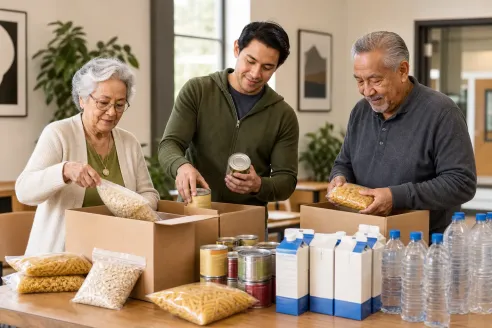
Short answer: call before donating food
All Seniors Foundation may be able to discuss unopened, commercially packaged shelf-stable food when current needs and safe handling allow, but this page is not an acceptance list. Before transporting anything, note the food type, quantity, package condition, visible dates, allergens, storage history, and whether a recall applies.
Do not assume that drop-off, pickup, refrigeration, delivery, distribution, shipping, a tax acknowledgment, or acceptance of a particular food is available. A short call protects the donor, the organization, and the people the donation is intended to help.
Who this Los Angeles food donation guide helps
This guide is for households, families, caregivers, schools, faith groups, offices, grocers, community organizers, and neighbors who want to offer food that may support older adults in Los Angeles County. It focuses on donor preparation and food-safety questions—not nutrition advice, eligibility, or a promise that food will be accepted or given to a particular person.
Commercially packaged staples
Examples to ask about include unopened canned or jarred foods, dry rice, pasta, cereal, oats, beans, shelf-stable milk, and individually packaged snacks.
Clear product information
Keep the original label readable so the name, ingredients, allergens, lot code, storage directions, package size, and visible date can be reviewed.
A confirmed receiving plan
Ask what is needed now, what quantity is practical, where it should go, when it can be received, and what to do if an item cannot be accepted.
Details to gather before calling
- Food category, brand or product name, package size, and total quantity.
- Whether each package is factory sealed and the label is complete and readable.
- The exact date wording shown, such as “best if used by,” “use by,” or “sell by.”
- Visible allergens and any special storage directions on the label.
- Where and how the food has been stored, including heat, moisture, pests, or temperature concerns.
- Any denting, rust, swelling, leaking, tearing, stains, broken seals, or other package damage.
Pause and ask first
- Fresh produce, bakery goods, refrigerated, frozen, or prepared food.
- Opened packages, unlabeled products, home-prepared food, or home-canned food.
- Infant formula, supplements, medical foods, or items marketed for a health condition.
- Bulk ingredients, damaged cases, unusually large quantities, or products involved in a recall.
- Anything that was stored in unsafe heat, moisture, pests, smoke, chemicals, or uncertain conditions.
A six-step food donation preparation process
Sort by storage type
Separate shelf-stable items from anything refrigerated, frozen, fresh, prepared, opened, or home-canned. Do not mix food with medicines, cleaning chemicals, or personal paperwork.
Inspect every package
Look for broken seals, leaks, swelling, severe dents, rust, tears, moisture, pests, stains, or missing labels. Do not taste food to decide whether it is suitable.
Record labels, dates, and allergens
Write down the product, quantity, exact date wording, allergen statement, and any storage instructions. Photograph labels if the team asks for details.
Check for recalls
Search the product and lot information through official recall resources when there is a concern. Do not donate a recalled product or remove its identifying label.
Call before transporting
Ask about current needs, quantity limits, receiving hours, storage, the appropriate location, and whether any item should go to a different qualified organization.
Follow only the confirmed plan
Keep food clean, dry, separated from chemicals, and protected during transport. Do not leave food at a door, lobby, sidewalk, office, or shipping carrier without instructions.
How to evaluate common food donation situations
| Situation | What to check | Best next step |
|---|---|---|
| Unopened canned or jarred food | Readable label, intact seal, no leaking, bulging, severe dents, heavy rust, or uncertain storage. | List the products, quantities, and visible dates; call to confirm current needs. |
| Dry rice, pasta, cereal, or beans | Factory seal, tears, moisture, pests, odors, label, allergens, and storage history. | Keep packages dry and closed; call before bringing a case or mixed box. |
| Fresh, refrigerated, frozen, or prepared food | Time, temperature, source, storage, packaging, transport, and receiving capacity. | Do not transport based on this page. Ask for specific advance confirmation. |
| Food drive or business surplus | Requested list, collection dates, case sizes, quantity limits, storage, transportation, and receiving contact. | Confirm the plan before announcing or purchasing items. |
| Damaged, recalled, opened, or unlabeled food | Do not repackage, relabel, conceal damage, or remove recall information. | Do not offer it as a donation; follow official disposal or recall instructions. |
Planning a food drive
- Choose the receiving organization before publishing flyers or wish lists.
- Use a confirmed list of currently requested items and package sizes.
- Set a collection window that matches storage and receiving capacity.
- Assign someone to inspect labels, seals, dates, recalls, allergens, and package condition.
- Plan clean, dry storage and transportation away from heat, pests, moisture, and chemicals.
- Decide in advance where unsuitable or excess items can responsibly go.
Date labels and recalls
Date labels do not all mean the same thing, and a date is not the only safety question. Package damage, storage temperature, contamination, recalls, and the receiving organization’s policy also matter. Tell the team exactly what the label says instead of deciding that an item is acceptable because it “looks fine.”
For current alerts, use the federal FDA recalls and safety alerts and USDA meat, poultry, and egg-product recalls.
A simple call script
Use facts and ask for a current answer instead of promising that food will be accepted.
“Hi. I have two unopened cases of commercially packaged shelf-stable food in Los Angeles County. The labels and dates are visible, and I have checked the packages for damage. Could you tell me what details you need, whether these items match a current need, and what next step—if any—I should follow before bringing or sending anything?”
Official food-safety and local donation resources
These sources explain general food-donation and shelf-stable-food safety. They do not confirm what All Seniors Foundation can accept today.
- Los Angeles County Public Health: Safe Food Donation Guidelines for Individuals
- USDA Food Safety and Inspection Service: Shelf-Stable Food Safety
- U.S. Food and Drug Administration: Surplus, Salvaged, and Donated Foods
- Los Angeles Regional Food Bank: Food Donations and Food Drives
For other item types, browse the main Donate page, the hygiene supplies guide, or the senior activity supplies guide.
Food donation questions
Can I donate canned or shelf-stable food in Los Angeles?
Possibly, but call All Seniors Foundation first. Commercially packaged, unopened shelf-stable foods may be easier to discuss than refrigerated or prepared food, but current needs, storage, dates, packaging, and handling capacity determine the appropriate next step.
What packaging and label details should I check?
Keep the original label visible and check that packaging is sealed, clean, dry, and not leaking, bulging, badly dented, heavily rusted, torn, or contaminated. Note the product name, quantity, package size, allergen statement, lot code, and visible date before calling.
Can I donate food near or beyond a date label?
Do not guess from the date alone. Date labels can have different meanings, while damaged packaging, recalls, and improper storage are separate concerns. Tell the team the exact wording and date shown and wait for a current answer before transporting anything.
Can I donate opened, homemade, or home-canned food?
Do not bring opened packages, food prepared in a home kitchen, or home-canned food without specific advance confirmation. Los Angeles County guidance for individual donors focuses on commercially packaged, unopened nonperishable food and advises against opened and home-prepared foods.
Can I donate refrigerated, frozen, fresh, or prepared food?
Ask before acquiring or transporting it. Perishable food requires time and temperature controls, appropriate storage, and a receiving plan. This page does not confirm that All Seniors Foundation can accept or handle refrigerated, frozen, fresh, or prepared food.
Can a business, school, or community group organize a food drive?
Call before announcing a drive or publishing a wish list. Confirm the currently requested items, collection window, packaging rules, quantity limits, storage, transportation, receiving contact, and what the group should do with unaccepted items.
Should I call before bringing or shipping food?
Yes. Do not leave, deliver, mail, or ship food based only on this guide. Call (818) 581-4101 or use the Contact form so All Seniors Foundation can confirm current needs and an appropriate next step.
Have food or pantry staples to offer?
Call before collecting more, loading a vehicle, dropping off, mailing, or shipping anything. The team can discuss current needs and an appropriate next step.
Important: Acceptance depends on current needs, product type, packaging, labels, dates, allergens, recall status, storage history, quantity, receiving capacity, and staff review. All Seniors Foundation does not guarantee acceptance, pickup, drop-off, refrigeration, storage, delivery, distribution, shipping, tax treatment, or use of any specific food. This guide is general information, not medical, nutrition, food-safety, legal, or tax advice. Follow official recall and disposal instructions and contact the appropriate public-health authority for food-safety questions.