
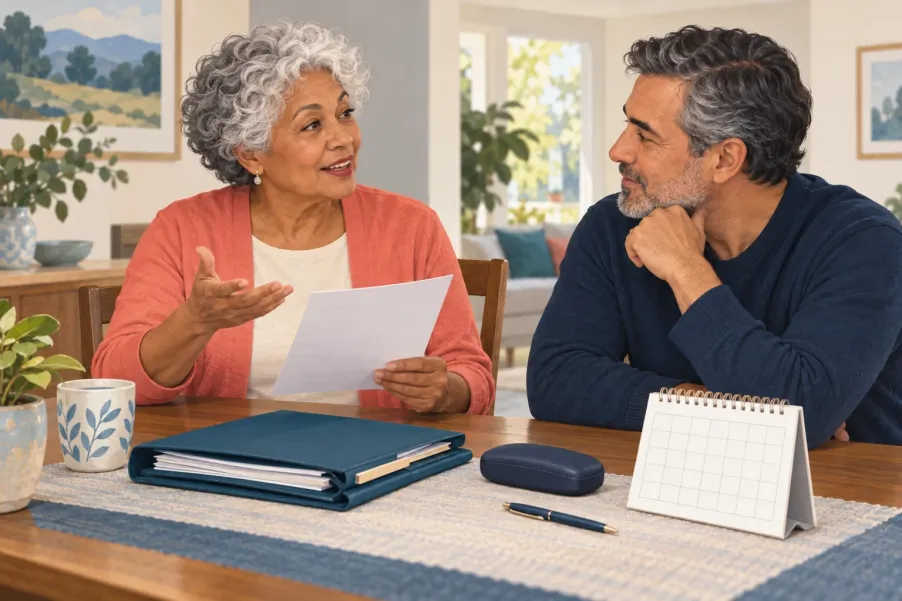
Planning a visit to NPMD Clinic in Encino starts with explaining your main concern, confirming the appointment type and expected costs, and organizing the information you want the clinician to review. This guide gives older adults and caregivers a phone script, preparation worksheets, arrival checklist, and a practical way to assign follow-up tasks after the appointment.
Four things to organize, from booking to follow-up
- One main purpose and the appointment type that fits it.
- Clear answers about the specific clinician, payment and arrival arrangements.
- A short agenda, current medication information and the patient’s preferences for help.
- A written next step with an owner and a way to check progress.
1. Start with what you need the visit to accomplish
A useful appointment request explains the decision or question you need help with. “I want to establish care and review who manages my prescriptions” gives the office more direction than “I need everything checked.” You do not need to identify a diagnosis before calling. Describe the purpose in your own words and let the clinical team determine the appropriate next step.
NPMD’s primary care information describes several kinds of visits. Use those descriptions to prepare a question, rather than selecting an appointment solely because its name sounds familiar.
- Establishing care: “I am looking for a clinician to help organize my ongoing care. What information should I send before the first appointment?”
- Discussing a concern: “I want to discuss a change I have noticed. Who should review the request and advise me about timing?”
- Clarifying a plan: “I have instructions from another visit and need to understand who is responsible for the next step.”
If you have several priorities, tell the office before scheduling. Ask what can reasonably fit into one appointment and what may require another visit. This article is an appointment-planning resource; it does not assess symptoms or replace individualized medical advice. For an emergency, call 911.
2. Use this phone script before you book
Keep a pen nearby and introduce the main purpose before listing administrative questions. If you are calling for another adult, explain your role and ask what permission the office needs to discuss that person’s care.
“Hello, I am calling about an appointment for myself [or for someone who has asked me to help]. The main thing we want to address is ______. We would like to know which appointment type to request, who would conduct the visit, and what to prepare. Could you help us confirm those details?”
Then work through the questions that apply:
- Visit: “What is the appointment called, and what is its intended focus?”
- Clinician: “Who will I see, and is that clinician accepting appointments for this request?”
- Payment: “What information do you need to check my exact insurance plan or explain self-pay charges?”
- Documents: “Which records or forms do you need, and what is your approved way to receive them?”
- Access: “Can you help me plan for ______, such as an interpreter, a mobility device, or a companion?”
Finish by reading back the date, arrival time, location and appointment type. Write down any unresolved question and which office will answer it. An appointment request or online message is not a confirmed booking until the clinic confirms the details.
3. Clarify the difference between appointment types
Similar names can describe different visits. Before choosing from NPMD’s annual physical information, ask the office to explain what it is scheduling. The following comparison is a conversation aid, not a statement about services covered at NPMD.
| Visit description | What to clarify | Question for the office |
|---|---|---|
| Medicare yearly Wellness visit | A prevention-planning visit; Medicare distinguishes it from a routine physical. | “Do you offer this specific visit, and am I eligible under my coverage?” |
| Routine or annual physical | What examination or other services the clinic proposes, and how they will be billed. | “What is included, and what might be charged separately?” |
| Visit about a particular concern | Whether the request needs clinical review and a separately scheduled appointment. | “How should I arrange time to discuss this concern?” |
Medicare’s official yearly Wellness visit guidance explains that the visit develops or updates a prevention plan and is not a routine physical examination. Additional services can create costs. Confirm your benefits and the provider’s participation directly; this guide does not establish that NPMD accepts your plan or that a particular visit will be covered.
Write your plan’s full name on the call sheet. Ask the clinic about its charges and your insurer about your benefits. If their answers differ, request clarification before agreeing to a service. Keep the answer associated with the specific clinician and appointment you discussed.
4. Prepare a one-page visit agenda
Give yourself one sheet for priorities, with supporting records kept separately. Start with the question you most want answered. A long collection of documents may be useful, but the first page should make your purpose easy to see.
- My main reason for this visit
- Complete this sentence: “Before I leave, I would like to understand ______.”
- What I want the clinician to know
- Write the relevant observation or concern in your own words. Separate what you noticed from what you think might explain it.
- My next two questions
- List them in order of importance. Leave room to note whether each was addressed or needs another appointment.
- What may make the plan difficult
- Note practical obstacles you want to discuss, such as arranging rides, obtaining paperwork, using an online portal, or coordinating with another office.
- My preferred way to receive instructions
- Write whether you would find printed instructions, a portal message or another available format easier to use.
The National Library of Medicine’s guide to talking with your doctor recommends preparing questions and medication information, asking for clarification, and obtaining written instructions when needed. The worksheet here turns those general ideas into an agenda you can personalize.
5. Make your medication information easy to review
If prescriptions or refills are part of your visit purpose, review NPMD’s medication-management overview and ask what the office wants you to bring. Its published information includes medication review, prescription management and refill coordination. A listed service does not guarantee that a particular prescription will be issued or changed.
Use one entry per item on a separate sheet. This is an information-organizing template, not an instruction to start, stop or change treatment:
- Name on the label: ______
- Strength and directions shown: ______
- How I currently take or use it: ______
- Prescriber or source, if known: ______
- My question about this item: ______
- Information I still need to confirm: ______
Also note known allergies or past reactions you want the clinician to review. If you are uncertain about a name or reaction, say so and ask how to clarify the record.
Include nonprescription products and supplements in the information you prepare. If you cannot read a label or are unsure whether an old list is current, mark that uncertainty. Do not fill gaps from memory just to make the sheet look complete.
Add the date you checked the list. If several people help organize the information, identify one person to assemble the version for this visit, with the patient’s agreement. Keep older instructions available as reference rather than silently treating them as the current plan.
6. Decide how a companion should help
Agree on the companion’s role before leaving home. One person may want help only with the ride; another may want someone to take notes or help explain a question. Make the arrangement explicit instead of assuming that accompanying an adult means speaking for them.
A short preference note can say:
- “I want my companion to help with ______.”
- “I would like to answer questions myself first.”
- “I would like some time to speak with the clinician privately.”
- “Please explain how I can authorize any follow-up communication involving my companion.”
Ask the office what documentation or permissions apply to your situation. Bringing someone to the appointment does not tell the office how you want every future message handled.
Keep the preparation worksheet with you or use the clinic’s approved records process. Ask which information belongs in an initial scheduling message and how more detailed records should be delivered. Public article comments are not an appropriate place to share medical histories, insurance numbers or other private records.
If an interpreter or a different communication format would help, raise that need when scheduling and confirm what arrangements are available. Do not assume a particular language, accessibility service or companion arrangement is automatically available for your appointment.
7. Confirm the arrival details before you travel
NPMD’s published contact address is 16101 Ventura Boulevard, Suite 300, Encino, CA 91436. Its listed telephone number is (818) 533-8393, and its published hours are Monday through Friday, 9 a.m. to 5 p.m. Check the clinic’s appointment and location details and confirm your specific visit before making the trip.
The contact page advises checking parking and building access when booking or calling. Use this departure checklist:
- Appointment: Date, requested arrival time, clinician and visit type confirmed.
- Route: Driver or transportation plan, destination and return arrangements identified.
- Building: Entrance, parking, drop-off and any mobility-related questions resolved with the office.
- Materials: Agenda, medication information and the identification, insurance cards or records the office requested.
- Instructions: Any visit-specific preparation confirmed with the clinic.
- Changes: Office contact information available if transportation or arrival plans change.
Do not infer preparation requirements from the appointment name. For example, ask the office whether it has any food, drink or medication instructions for the particular visit rather than following a generic checklist. If the instructions are unclear, contact the clinical team for clarification.
8. Leave with a follow-up ownership worksheet
Before the appointment ends, turn each next step into a task with an owner and a way to check its status. “Follow up later” leaves several questions open. A more useful note identifies who acts, when they should act and whom to contact if the next step remains unresolved.
Repeat this small worksheet for each agreed task:
- Task
- What exactly needs to happen? ______
- Owner
- Who will arrange it: the patient, a chosen helper, this clinic or another office? ______
- Timing
- What timing did the clinician or office give? ______
- How I will know
- Will I receive a call, written instruction, portal message or appointment confirmation? ______
- If nothing happens
- Which office should I contact, and when? ______
For example, if the plan involves obtaining a record from another practice, clarify who requests it and who confirms receipt. If another appointment is needed, distinguish “the office will contact me” from “I need to call.” Do not add deadlines or clinical instructions that the care team did not give you.
Before leaving, read the most important task back in your own words and ask whether you understood it correctly. At home, keep the worksheet alongside the written visit instructions. A caregiver can help track agreed tasks while leaving clinical decisions and changes to the treating team.
9. Separate the medical appointment from support around it
A medical appointment may leave practical questions about getting help at home, organizing records or finding the right support service. Review All Seniors Foundation’s services to identify a relevant topic. Our care-coordination information and primary-care navigation resource can help you prepare a separate support request.
For background on this local resource, read the Foundation’s NPMD Medical Services overview. You can also contact All Seniors Foundation with a concise description of the help you are seeking.
Keep a Foundation support inquiry separate from clinic appointment confirmation and clinical instructions. An inquiry does not establish eligibility, coverage, available services or a booked appointment. Identify which organization is handling each request so that you know whom to contact for an update.
10. Common questions about planning an NPMD visit
How do I request an appointment with NPMD?
Use the clinic’s official contact information and explain the main reason for your request. Ask which appointment type and clinician fit that request, then confirm the date, arrival time, location and preparation details directly with the office. Submitting a message alone does not confirm an appointment.
Does this guide mean NPMD accepts my insurance?
No. Confirm your exact plan and the specific clinician and service with the clinic and your insurer. Ask about expected charges and anything that could be billed separately. This article does not verify insurance participation, Medicare assignment or eligibility for a covered benefit.
Is an annual physical the same as a Medicare Wellness visit?
No. Medicare describes its yearly Wellness visit as prevention planning and distinguishes it from a routine physical examination. Ask the clinic which visit it is offering and confirm benefits before scheduling. A clinic’s annual-physical page does not establish Medicare Wellness visit coverage.
Can a caregiver attend and help with questions?
Ask the office about arrangements and agree with the patient on the help they want. That might include transportation, notes or tracking follow-up. Confirm any permission needed for the office to discuss medical information with a companion or include that person in later communications.
What if my medication list or records are incomplete?
Tell the office what you have and what you still need to confirm. Mark missing or uncertain details clearly, and ask how to provide any additional information. Do not guess or change treatment to reconcile conflicting paperwork; direct questions about the plan to the clinical team.
Does contacting All Seniors Foundation book my clinic visit?
No. A Foundation inquiry and a clinic appointment are separate steps. Confirm the appointment with NPMD and use Foundation channels for the support request you submitted there. Keep a separate contact and next action for each organization so follow-up remains clear.
Clinic details and linked sources checked September 8, 2026. Featured image: an original editorial illustration, not a photograph of NPMD staff or patients.





