
Quick Answer: How Do You Stop a Wound From Weeping Clear Liquid?
A small amount of clear or pale fluid can happen while a wound is healing, but the goal is not to aggressively “dry it out.” The safer goal is to manage drainage with clean hands, gentle cleaning if instructed, an appropriate absorbent dressing, protection for the skin around the wound, and medical guidance if the drainage is heavy, increasing, cloudy, foul-smelling, bloody, yellow-green, or paired with redness, warmth, swelling, pain, fever, or red streaks.
Seniors should contact a healthcare professional promptly for weeping wounds connected to diabetes, poor circulation, leg swelling, pressure sores, surgery, burns, bites, punctures, cancer treatment, immune suppression, or wounds that are not improving. This guide is educational and does not replace medical advice.
When a Weeping Wound Needs Urgent Attention
Call a healthcare professional promptly if drainage is getting heavier, the wound smells bad, pus appears, pain increases, redness spreads, the area feels warm or swollen, red streaks appear, or the senior has fever or chills. Call 911 or go to the nearest emergency room for severe bleeding, sudden confusion, fainting, signs of sepsis, chest pain, serious injury, or any emergency symptoms.
Key Takeaways for Seniors and Caregivers
- Clear fluid is not automatically infection: some drainage can be part of healing, but the amount, color, odor, and wound changes matter.
- Do not trap heavy drainage: a weeping wound may need an absorbent dressing plan rather than thick ointment or an airtight covering.
- Protect the surrounding skin: constant moisture can make nearby skin white, soggy, itchy, fragile, or irritated.
- Avoid harsh drying products: alcohol, hydrogen peroxide, iodine, powders, essential oils, and home remedies can irritate tissue unless a clinician specifically recommends them.
- Leg fluid is different: fluid leaking from swollen legs may involve edema, circulation, heart, kidney, vein, or lymph issues and needs medical review.
- Call early for high-risk wounds: diabetes, pressure sores, surgery, bites, punctures, burns, poor circulation, immune suppression, or wounds on the foot need extra caution.
What Is a Weeping Wound?
A weeping wound is a wound that leaks fluid. The fluid may be clear, pale yellow, pink, bloody, cloudy, thick, or pus-like. Some drainage can happen when the body is healing, especially when a wound is open or covered by a dressing. MedlinePlus explains that wounds heal in stages, and open surgical wounds may need dressings that absorb drainage while the wound fills in from the bottom upward.
The phrase “dry up” can be misleading. Wounds usually need a balanced healing environment: not too dry, not too wet, and not sealed in a way that traps fluid against fragile senior skin. For older adults, the safest next step depends on the type of wound, the amount of drainage, the senior’s health conditions, and whether infection signs are present.
What Different Types of Drainage May Mean
Drainage color alone does not diagnose the wound, but it can help a caregiver describe what is happening. A clinician may ask about the amount, color, odor, and timing of drainage, plus pain, redness, warmth, swelling, fever, and whether the wound is improving.
| What You See | What It May Suggest | Safer Response |
|---|---|---|
| Small amount of clear or pale fluid | May happen with healing, but should trend down over time. | Use clean dressing care and monitor amount, color, odor, and skin around the wound. |
| Fluid soaking through dressings | The wound may need a different absorbent dressing or medical evaluation. | Call a clinician, especially if the drainage is new, increasing, or hard to control. |
| Cloudy, yellow-green, thick, or pus-like drainage | Can be a warning sign for infection. | Contact a healthcare professional promptly. |
| Bad smell from the wound | Can suggest infection or tissue breakdown. | Do not cover it up with products; ask for medical guidance. |
| Fluid leaking from swollen legs | May involve edema or circulation issues rather than a simple cut. | Call a clinician; ask whether leg swelling, infection, heart, kidney, vein, or lymph issues should be checked. |
Safe Steps to Manage a Weeping Wound at Home
Use these steps only for a minor wound that a healthcare professional says can be managed at home. If the senior has diabetes, a surgical wound, a foot wound, a pressure sore, immune suppression, fever, spreading redness, heavy drainage, or worsening pain, call for medical guidance instead of trying to solve it with home products.
1. Wash Hands First
Clean hands reduce the chance of bringing germs to the wound. Use soap and water or hand sanitizer before and after dressing changes.
2. Follow the Written Plan
If a doctor, surgeon, wound-care clinic, or home health nurse gave instructions, follow that plan. Do not substitute internet advice for a clinician’s wound plan.
3. Clean Gently if Instructed
MedlinePlus notes that open surgical wound care may include normal saline or mild soapy water if instructed. Avoid harsh products unless the care team says they are appropriate.
4. Use the Right Dressing
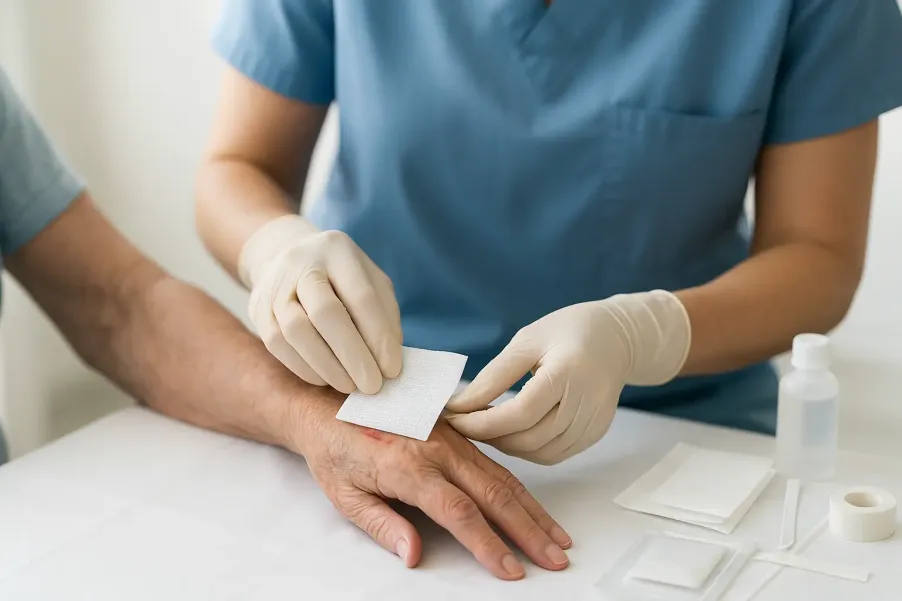
A weeping wound often needs a dressing that absorbs drainage while protecting the wound. If dressings soak through, ask whether the dressing type or frequency should change.
5. Protect Nearby Skin
Moisture can irritate skin around the wound. Ask whether a barrier product is appropriate around, not inside, the wound.
6. Track Changes
Write down drainage amount, color, odor, pain, redness, swelling, fever, and dressing changes. A dated photo may help a clinician compare progress.
What Not to Put on a Weeping Wound Without Medical Advice
Caregivers often ask whether iodine, peroxide, powders, alcohol, antibiotic ointment, petroleum jelly, or “drying” home remedies can stop fluid. Those products can be harmful in the wrong wound. MedlinePlus cautions that alcohol, peroxide, iodine, antibacterial soaps, lotions, creams, and herbal remedies should not be used around some open surgical wounds unless the provider says it is OK.
In general, do not use powders to “dry up” drainage, do not pack a wound unless instructed, do not seal heavy drainage under a tight covering, and do not keep adding ointment if the surrounding skin is becoming white or soggy. The safer question is: “What dressing plan manages drainage while protecting healing tissue and nearby skin?”
Weeping Legs: Why Fluid Leaking From Legs Needs Special Care
Fluid leaking from the legs in an older adult may not be a simple wound problem. It can be connected to chronic swelling, skin breakdown, venous disease, lymphedema, heart or kidney issues, infection, medication changes, or fragile skin. CDC notes that cellulitis is common in the feet and legs, and that chronic edema can increase cellulitis risk.
If a senior’s legs are swollen and leaking fluid, call a healthcare professional. Ask whether the senior needs evaluation for infection, circulation, swelling, compression safety, medication review, or wound-care support. Do not start compression wraps, tight bandages, or aggressive drying products without medical guidance, especially if the senior has poor circulation, heart failure, diabetes, or pain.
When to Call a Doctor, Surgeon, or Wound-Care Nurse
- Drainage is increasing: the dressing is soaking through or needs frequent unexpected changes.
- Drainage looks infected: pus-like, cloudy, yellow-green, or foul-smelling fluid appears.
- The skin changes: spreading redness, warmth, swelling, tenderness, blisters, or red streaks develop.
- The senior feels sick: fever, chills, confusion, weakness, or worsening pain occurs.
- The wound is high-risk: diabetes, foot wound, pressure sore, surgical wound, bite, puncture, burn, cancer treatment, or immune suppression.
- The wound is not improving: drainage continues, the wound opens more, or new skin breaks down.
- There is a bad smell: odor can be a warning sign and should not be hidden with creams or sprays.
- Legs are leaking fluid: swollen legs with fluid leakage need medical review.
- Supplies are not working: dressings do not stay on, irritate skin, or cannot control drainage.
- You are unsure: when in doubt, call early rather than waiting for a wound to worsen.
Call Script for a Weeping Wound
“I am caring for an older adult with a wound that is leaking fluid. The wound is on [body area]. It started [when/how]. The fluid is [clear/cloudy/yellow-green/bloody/pink] and the amount is [small/moderate/heavy/soaking dressings]. The surrounding skin is [normal/red/warm/swollen/white/soggy/painful]. The senior has [diabetes/leg swelling/surgery/poor circulation/immune concerns/blood thinner use/none that I know of]. What dressing plan should we use, and does this need urgent evaluation?”
How All Seniors Foundation May Help in Los Angeles County
All Seniors Foundation cannot diagnose a wound, prescribe wound treatment, or replace a licensed healthcare professional. We may help qualifying seniors, families, caregivers, and case managers in Los Angeles County think through practical support needs connected to care. That may include wound care support coordination, home health care resource questions, transportation coordination, durable medical equipment questions, in-home support, and help figuring out what service direction may fit.
If you are unsure where to begin, call All Seniors Foundation or review our free senior help in Los Angeles guide. Related guides cover the best ointment for open wounds in seniors, when to stop putting Vaseline on a wound, and what a weeping wound and different drainage may mean.
Official References Used for This Guide
- MedlinePlus: Surgical wound care – open
- MedlinePlus: Cuts and puncture wounds
- MedlinePlus: Surgical wound infection – treatment
- CDC: About cellulitis
- CDC: Surgical site infection basics
- CDC Project Firstline: Draining wound infection-control micro-learn
Medical Disclaimer
This page is for general education only. It is not medical advice, diagnosis, or treatment. For personal wound-care instructions, contact a licensed healthcare professional. For emergencies, call 911 or go to the nearest emergency room.
Frequently Asked Questions About Weeping Wounds
How do I stop a wound from weeping clear liquid?
Do not try to aggressively dry it out. Use clean hands, follow the care plan, protect surrounding skin, and use an appropriate absorbent dressing. Call a clinician if drainage is heavy, increasing, cloudy, foul-smelling, painful, or paired with redness, warmth, swelling, fever, or red streaks.
Is clear fluid from a wound normal?
A small amount of clear or pale fluid can happen during healing, but it should be monitored. Increasing fluid, soaking dressings, odor, pus-like drainage, worsening pain, or spreading redness needs medical advice.
Should I use powder or iodine to dry a weeping wound?
Do not use powder, iodine, alcohol, hydrogen peroxide, antibacterial soap, essential oils, or home remedies unless a healthcare professional specifically recommends them for that wound. Some products can irritate tissue or slow healing.
What if fluid is leaking from a senior’s legs?
Fluid leaking from swollen legs needs medical review. It may involve edema, circulation, vein, lymph, heart, kidney, infection, or skin-breakdown issues. Do not start tight wraps or compression without professional guidance.
When is a weeping wound an emergency?
Seek urgent care for severe bleeding, serious injury, sudden confusion, fever with worsening infection signs, rapidly spreading redness, red streaks, signs of sepsis, or any emergency symptoms.
Can All Seniors Foundation tell me what dressing to use?
No. All Seniors Foundation cannot diagnose wounds or prescribe dressings. We may help qualifying Los Angeles County seniors and families connect with support resources, transportation, home health questions, and related senior services.
How should caregivers describe a weeping wound when calling a clinician?
Share the wound location, when it started, what caused it, drainage color and amount, odor, pain, redness, swelling, fever, senior health risks, current dressing routine, and whether the wound is improving or worsening.





