
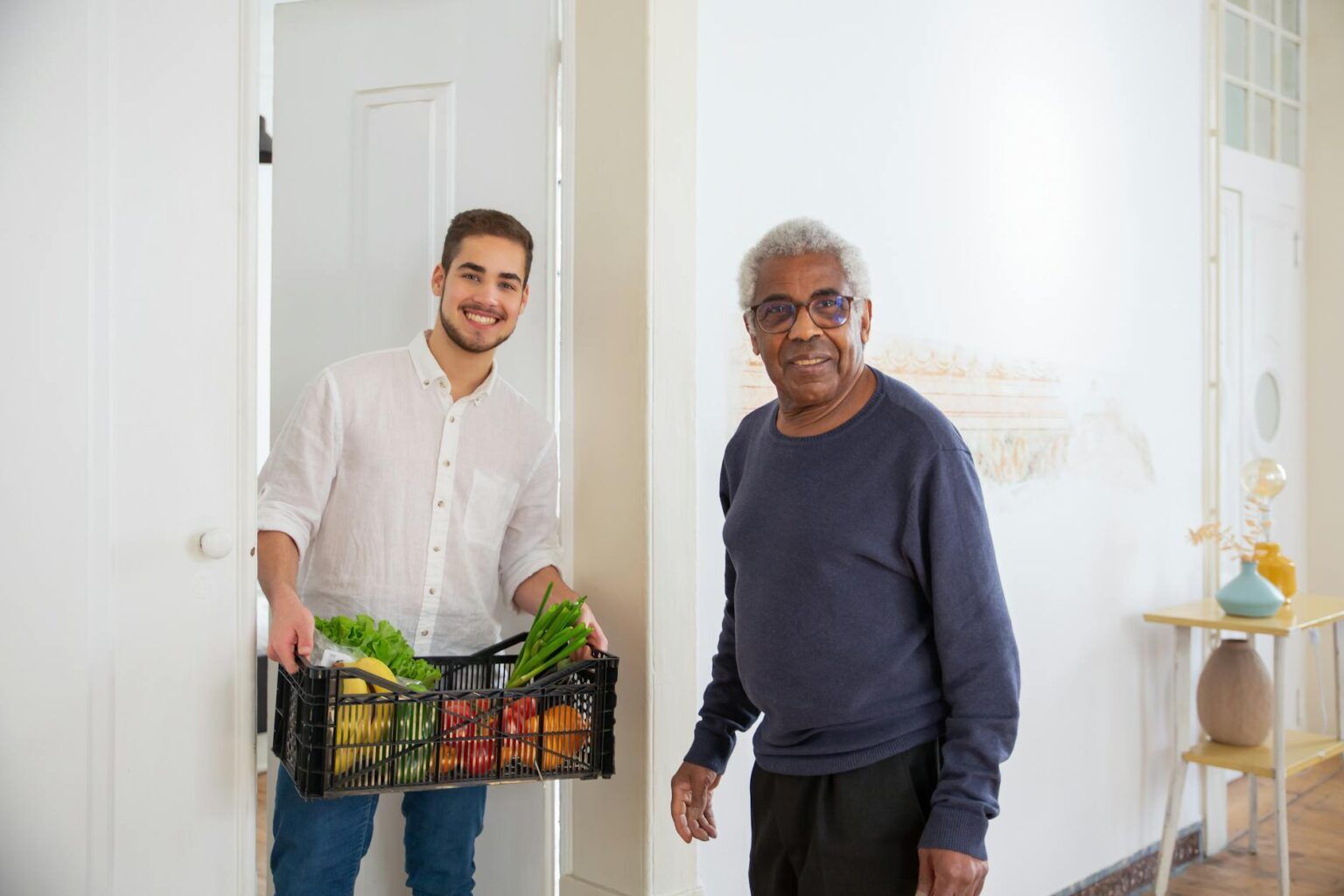
Food-access resource guide for Los Angeles County
Meal deliveries, grocery support visits, pantry lines, and community meal sites can reveal needs that go beyond the food visit itself. This All Seniors Foundation guide helps volunteers and staff share a call-first senior-support resource respectfully, without promising meals, groceries, eligibility, transportation, or outcomes.

Quick answer
Meal program volunteers can share All Seniors Foundation as a call-first nonprofit resource for non-emergency senior-support questions in Los Angeles County. The safest handoff is simple: ask permission, offer the phone number, encourage the older adult or trusted contact to call directly, and avoid promising meals, groceries, delivery, approval, or any specific result.
- Use the older adult’s preferred language and trusted contact when possible.
- Keep notes basic: city, callback person, preferred language, and the main question.
- For immediate danger or urgent medical needs, call 911 or go to the nearest emergency room.
Why food-access visits need a different handoff
Meal and grocery programs are often built around trust. A volunteer may see the same older adult each week, meet a family member at the door, hear that a phone has been disconnected, or notice that a senior is unsure who to call after a change at home. Those moments can be helpful, but they also require clear boundaries. A volunteer is not there to decide eligibility, provide nutrition advice, inspect the home, solve a medical problem, or become the person’s case manager.
A good resource handoff keeps the meal visit focused and gives the older adult a next step they control. Instead of asking for private details in the doorway or in a pantry line, the volunteer can say, “If you would like, I can share a phone number for All Seniors Foundation. They may be able to talk through senior-support questions in Los Angeles County when help is available. It is best to call first so they can understand what is going on.” That gives the person a path without pressure.
Doorstep delivery
A volunteer may only have a short, semi-private conversation. Share the number and keep the visit brief unless the program has another process.
Pantry or meal-site line
Privacy is limited. Offer a card or phone number quietly instead of asking personal questions where others can hear.
Family pickup
A caregiver or relative may want a starting point. Encourage the family to call directly and confirm current options.
Coordinator follow-up
If the meal program has a coordinator, follow that internal path before sharing any information outside the program.
A six-step food-access handoff process
Use this process when the situation is non-emergency, the older adult or trusted contact seems open to a resource, and your meal program rules allow volunteers to share outside contact information.
Pause before asking questions
Do not turn a meal delivery or pantry visit into an interview. Start by listening and noticing whether the person is asking for a resource or simply sharing a concern.
Ask permission to share
Say, “Would it be helpful if I gave you a senior-support phone number you can call?” Permission keeps the older adult in control.
Use call-first wording
Describe All Seniors Foundation as a Los Angeles County senior-support resource that may help discuss next steps when available. Do not promise a service.
Keep the information practical
Offer the phone number, website, and a short note about calling with a trusted family member or caregiver if that makes the conversation easier.
Use the program coordinator
If the person asks for help beyond a simple phone number, follow your meal program’s coordinator or supervisor process instead of collecting private details yourself.
Record only what is allowed
If your program allows notes, keep them minimal and neutral. Avoid health details, financial details, immigration details, benefit details, or family conflict notes.
Resource-card checklist for meal and grocery volunteers
A small card, flyer, or text message can work better than a long explanation. The goal is to make the next step easy without making the older adult feel watched, judged, or rushed.
Include only basics
- All Seniors Foundation name
- Phone number and website
- “Call first” language
- Los Angeles County senior-support focus
Use respectful wording
Try: “For non-emergency senior-support questions, you or a trusted contact can call All Seniors Foundation to discuss what may be available.”
Prepare for language access
If the person prefers another language, note that a trusted family member or caregiver can help with the first call if the senior wants that support.
Protect dignity
Do not write sensitive notes on the card. Do not hand it over in a way that draws attention in a public meal line.
Simple scripts for common food-access moments
Scripts help volunteers avoid overexplaining, especially when the visit is short or the setting is public. Adapt the wording to your program’s rules and the older adult’s comfort level.
Doorstep delivery script
“I am here with today’s delivery, and I also have a senior-support resource if you would like it. All Seniors Foundation is a Los Angeles County nonprofit you can call first with non-emergency support questions. They can talk with you or a trusted contact about what may be possible.”
Pantry-line script
“I do not want to discuss private details here, but I can give you a phone number for a senior-support organization. You can call when you have privacy and ask what information would be helpful.”
Family pickup script
“If your family is trying to organize senior support, this guide may help you prepare for a call: Senior Support Call Checklist for Los Angeles Families. It does not replace a direct conversation, but it can help gather basic questions.”
Coordinator script
“This sounds like something our coordinator should know about before I share anything further. With your permission, I can tell the coordinator that you asked for a senior-support resource and would like a respectful next step.”
Decision guide: share, escalate, or stop
Not every concern belongs in a casual volunteer conversation. Use these decision cards to keep the response proportionate.
Share the resource
Use this path when the older adult asks for help finding senior-support resources, the situation is non-urgent, and they are comfortable receiving a phone number or website.
Escalate to the coordinator
Use this path when the question involves private details, repeated concerns, a family conflict, missed deliveries, changing contact information, or a request outside the volunteer role.
Stop and use emergency help
Use this path for immediate danger, urgent medical symptoms, threats, abuse concerns, a serious fall, or a situation where the older adult cannot remain safe.
Do not promise follow-through
If you cannot personally verify a next step, say so. “I can share the number” is safer than “someone will take care of it.”
Common mistakes and red flags
Most volunteer handoff problems come from trying to be too helpful too quickly. A careful handoff protects the senior’s privacy and keeps the program’s role clear.
Asking too much in public
A pantry line, dining room, or doorstep is usually not the right place for detailed health, financial, legal, benefits, or family questions.
Creating a service expectation
Do not say that All Seniors Foundation will provide meals, groceries, transportation, equipment, appointments, forms, or approvals. Say that the person should call first to discuss current options.
Skipping the meal program process
Your program may have rules for welfare checks, missed deliveries, unsafe homes, or family contact. Follow those rules before adding another referral step.
Ignoring urgent warning signs
Confusion, severe pain, threats, a fall, fire danger, or inability to stay safe should not wait for a routine resource call.
How All Seniors Foundation may help after the handoff
All Seniors Foundation helps older adults and families in Los Angeles County access free support services, resource navigation, and practical senior-care assistance when available. A first call can help the team understand the person’s question, confirm the best contact, and suggest a careful next step. The call may be most useful when the older adult, a trusted family member, or a caregiver can explain the main concern in their own words.
For meal program volunteers, the important part is not to solve the entire situation. It is to preserve dignity, avoid unsupported claims, and connect the person to a call-first resource that can discuss senior-support navigation. The related guides below can also help families and community helpers prepare before they call.
For a separate All Seniors inquiry route, review volunteer and service-learning pathways.
Related All Seniors Foundation resources
Meal program resource-sharing FAQ
Can meal program volunteers share All Seniors Foundation with an older adult?
Yes. Meal program volunteers, grocery support teams, food-pantry staff, and community meal helpers in Los Angeles County can share All Seniors Foundation as a call-first resource when an older adult or trusted contact wants help finding non-emergency senior-support navigation.
What should a volunteer say before giving out the phone number?
Use simple, careful language: All Seniors Foundation may be able to discuss senior-support questions when help is available, and the older adult or trusted contact should call first to explain the situation and confirm the safest next step.
What information is useful for a senior-support call?
Helpful basics include the Los Angeles County city or neighborhood, preferred language, best callback person, and one practical concern. Volunteers should not collect health, financial, legal, benefits, or eligibility details unless their own program has a formal process and the older adult gives permission.
Does this article promise meal delivery, groceries, transportation, or any service?
No. This is educational resource-sharing guidance. It does not promise meal delivery, groceries, transportation, appointments, service availability, eligibility, pickup, delivery, benefits help, or any outcome.
Should a volunteer call All Seniors Foundation for the older adult?
Usually the older adult, family member, caregiver, or authorized trusted contact should call directly. If a meal program coordinator has a formal process for helping with calls, follow that process and get permission before sharing information.
What if the older adult prefers another language or needs family help?
Encourage the person to include a trusted family member, caregiver, or support person if that makes the call easier. Share only basic resource information and avoid discussing private details in a public or rushed setting.
What if a volunteer sees an emergency or immediate safety concern?
If someone may be in immediate danger, has urgent medical symptoms, or cannot stay safe, call 911 or go to the nearest emergency room. All Seniors Foundation is better suited for non-emergency support navigation and call-first planning.
Have a senior-support question in Los Angeles County?
Call first so All Seniors Foundation can understand the situation, confirm current options when available, and suggest the safest next step for the older adult or trusted contact.
